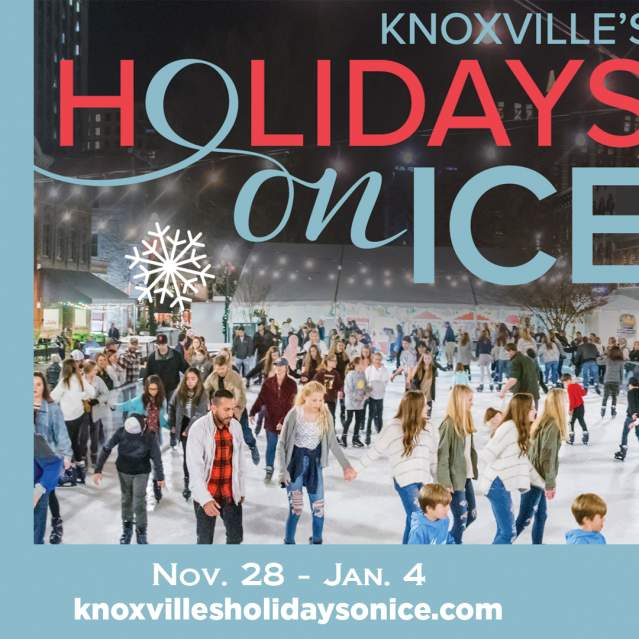
Travelers from the north are sometimes surprised that Knoxville, Tennessee, here in the Sun Belt, has an ice culture. But it’s not a novelty, or something new we’ve created to please northern tourists. The Holidays on Ice skating rink has been a feature on Market Square since the 1980s, albeit much more dependably in recent years. Knoxville and its suburb, Farragut, have two separate ice-skating rinks.
And icy sports have a deep history here, and one that’s not completely unnatural. We may be in the South, on some maps, and it does get very hot in the summer, but it does also freeze here, sometimes for weeks on end. Once, in January 1985, during a “polar vortex,” Knoxville recorded 24 below, making it the coldest spot in the entire United States.
That may have been freakish, but for generations we’ve come to adapt to cold weather, and even to have fun with it. A Harper’s Magazine feature story about Knoxville in 1858 described children and adults sledding on ice down Cumberland Avenue, east of Gay Street, two blocks down to Central. The city’s steep hills have always made for sometimes-treacherous wintertime fun.
Back then, some parts of the river in the wintertime were shallow enough to ice over, especially an area on the south side, where a shoal protected a long, shallow pool, accessible from downtown across the Gay Street Bridge. It iced over so often that by 1885, downtown hardware stores stocked ice skates in the winter. In January 1898, a newspaper article remarked that “There are perhaps 200 people in Knoxville who know how to use ice skates and really enjoy skating.”
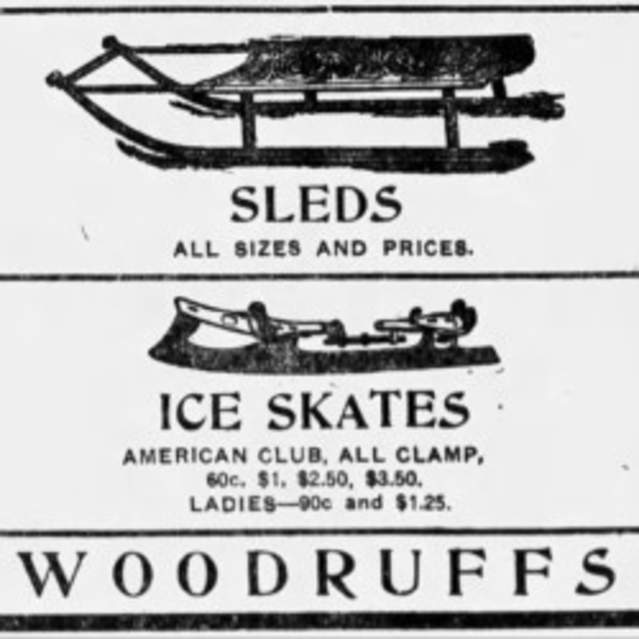
By 1905, Woodruff’s, the big hardware and furniture store located in the building now occupied by Downtown Grill and Brewery, was selling multiple varieties of ice skates for both men and women. Of course, there were no commercial skating rinks at the time, so skating was done mostly on farm ponds and on that strip of the river downtown.
It was some years before we began to make ice a Knoxville institution. Technology helped. Not to be confused with the Christmastime amenity on Market Square, Holiday on Ice was a big, elaborate, professional extravaganza. It started up north, in Toledo, in 1942, and was an attraction across the nation for half a century. Now based in Germany, it’s best known in Europe. But it created an interesting chapter in Knoxville’s ice-recreation history.
Believe it or not, Holiday on Ice first arrived in Knoxville back in July 1949, as an extraordinary special event at UT’s Shields-Watkins Field—modern-day Neyland Stadium—a remarkable feat just to freeze a thin layer of 8,000 square feet of ice on the hottest month of a Tennessee summer, made possible with a layer of sand and a reported nine miles of refrigerant piping and large portable compressors. (Remarkably, Coach Bob Neyland approved of this use of his famous field.) The star performers were Leo Freisinger, bronze-medal speed skater in the 1936 Berlin Olympics, and Dorothy Goos, 1942 figure-skating champion.
The extravaganza returned to UT’s stadium again and reportedly “thrilled thousands” there, but in 1950 opted for Duff Field, a high-school football field in South Knoxville, at which time it featured a reported 115 skating performers.
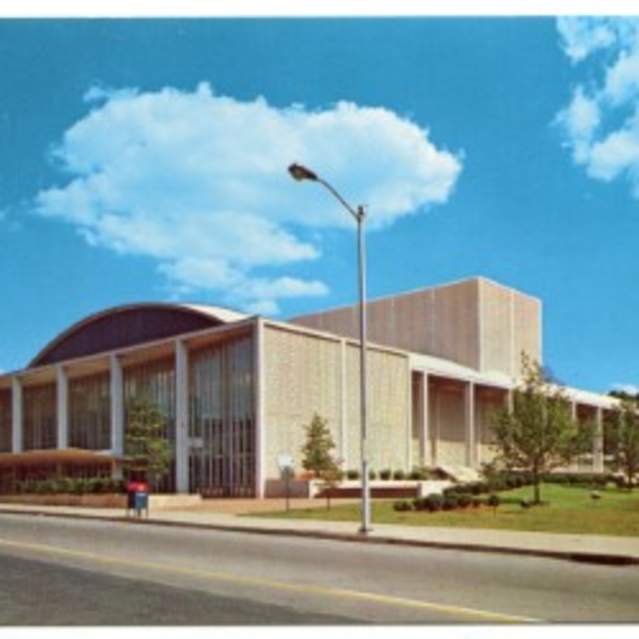
Enlisting other famous skaters, like for several years Norway’s Olympian movie-star Sonja Henie, Holiday on Ice became a national phenomenon, returning to Knoxville on an annual basis beginning in 1961 at the new, versatile Civic Coliseum, which was in fact designed in part with ice shows in mind. Interiors are easier to refrigerate. The first show seen at the Coliseum, in the summer of 1961, was the world premiere of the 1962 show of Holiday on Ice. The big show announced that this city in Tennessee, with its big new arena amenable to icy shows was to be its new headquarters. Knoxville Scenic Studios, a professional theatrical equipment company since 1933, began supplying the show’s extravagantly colorful settings.
For 30-odd years, Holiday on Ice and related shows—later, many were produced in partnership with Disney for theme-related shows—became much-anticipated annual attractions in Knoxville. Knoxville had a reason to attend Holiday on Ice shows with something like a hometown pride.
But that same ice that thrilled people of all ages with its skilled pirouettes and arabesques and sit spins was sometimes used for sheer combat.
Today, the Ice Bears, Knoxville’s hockey team, have been representing the city for 25 years, longer than any other pro-sports team, and they’re still attracting fans by the thousands—but they’re not Knoxville’s first ice-hockey team. They’re actually the fourth. The Civic Coliseum was hardly open in 1961 before the Knoxville Knights, of the Eastern Hockey League, were skating there. Despite a lull in the 1970s and early ‘80s, the city has hosted a professional ice-hockey team for most of the last 65 years. More than a dozen former Knoxville players have become stars in big-league hockey, including Pat Quinn, who played for the Knoxville Knights in the 1960s but became better known later as a coach, taking took two Canadian teams to the Stanley Cup—plus an Olympic gold-medal team in 2002—and Bill Speer, a key player for the Boston Bruins in their Stanley Cup championship.
Seeking ways to use the ice profitably when a flying puck wasn’t involved, the Coliseum often invited the public to skate on the ice on afternoons during the hockey season. Many Knoxvillians learned to ice skate in this huge room where major stars like Bob Dylan, Loretta Lynn, James Brown, and the Rolling Stones also performed.
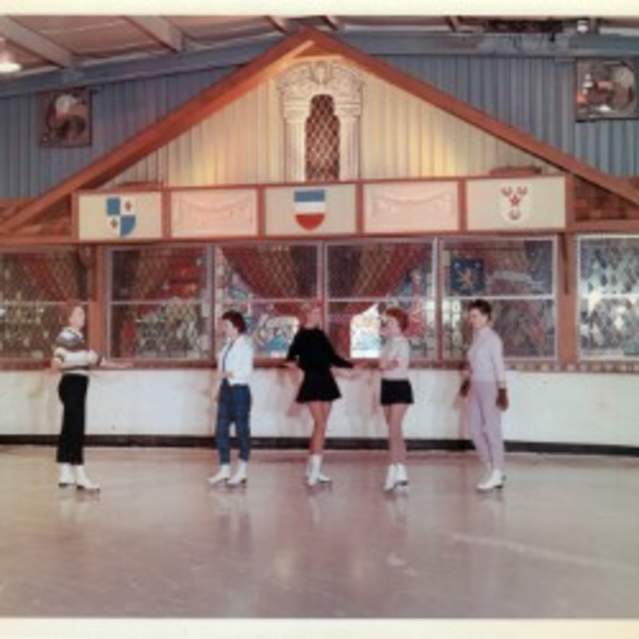
Inspired by the popularity of those Coliseum ice shows and hockey games, Knoxville in the early 1960s developed other icy subcultures. Opening in Bearden in 1962 was the Ice Chalet, the city’s first permanent skating rink, offering both professional figure-skating lessons and exhibitions, supervised by German professional skater Robert Unger, as well as junior ice-hockey league coaching and tournaments. For hundreds, winter Sunday afternoons at the Ice Chalet became a Knoxville tradition. The same Ice Chalet, which still bears some of its mid-century modern Alpine ski-lodge design, remains popular today.
The county’s largest permanent skating rink, the Icearium, opened in the western suburbs in 2002, to provide year-round skating on an NHL-sized rink.
So this December, the 40-year holiday tradition of a small ice-skating rink on Market Square may seem surprising, but maybe we can also call it historically authentic.
Enjoy your own Holidays on Ice here!
Images & Captions:
Woodruff’s Sleds and Skates. (Knoxville Sentinel, Dec. 20, 1905)
Bearden’s Ice Chalet, 1962. (The Ice Chalet/Knoxville History Project.)
Author
Jack Neely
Jack is the Executive Director of the Knoxville History Project, an educational nonprofit whose mission is to research and promote the history of Knoxville. He is a journalist who has been writing about his hometown’s character and heritage for many years. He has written several books about Knoxville and its history, and they can be purchased in various places throughout the city including Union Avenue Books and the Visit Knoxville Gift Shop.