Editor's Note: What does Knoxville, Tennessee, have in common with Massachusetts? More than you might think. From the Revolutionary War general who gave Knoxville its name to the New Englanders who helped shape the city's newspapers, education, landmarks, and traditions, historian Jack Neely explores the surprising connections between East Tennessee and the Bay State. Discover how these early influences helped shape the Knoxville we know today!
Thanksgiving celebrates a memorable feast that happened more than 400 years ago, in coastal Massachusetts, which is almost 1,000 miles away. It’s true that the Tennessee Society of Mayflower descendants sometimes meets in Knoxville, where some of its members live. But what else does Massachusetts have to do with Knoxville?
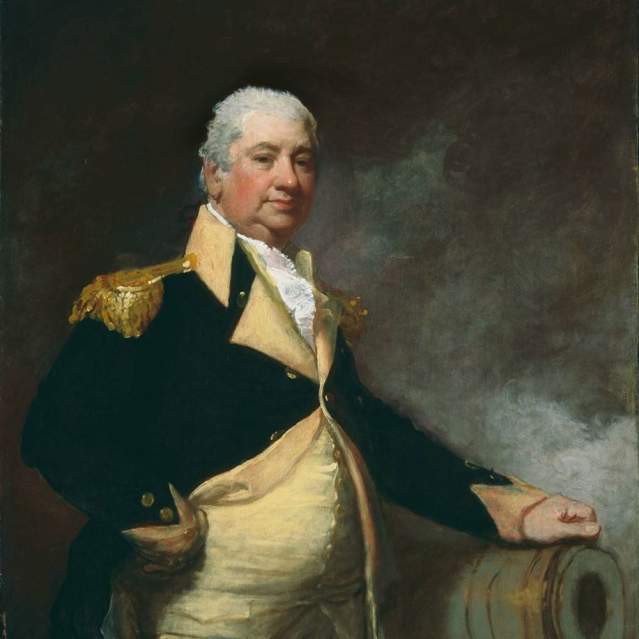
Well, quite a lot, if you look at our story. To begin with, Knoxville is named for a former Boston bookseller. Henry Knox became more famous as one of George Washington’s chief strategists during the Revolutionary War, later to be our first president’s secretary of war—which put him in charge of the government of the first U.S. territories that bordered on Native American and Spanish colonial lands. That included Knoxville, capital of the Southwest Territory. If Knox never visited this part of the country, the word Knoxville frequently appeared on his Philadelphia desk, and he knew some people here, notably Gov. William Blount.
But there’s a lot more to our connections with the Bay State. Among the very first Knoxvillians who shaped the city and its new state were a few people with Boston accents.
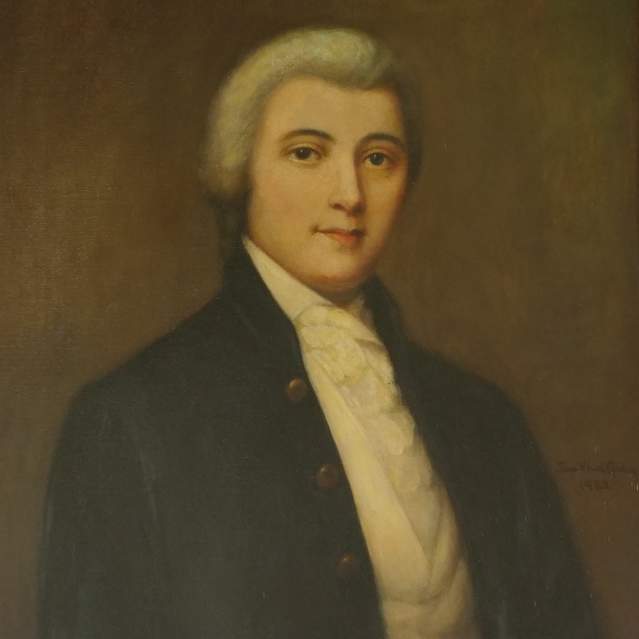
One was young George Roulstone, who was only 18 when he launched a Boston-era newspaper, the Salem Chronicle and Essex Advertiser. It lasted only a few months, perhaps because there were lots of other newspapers in Boston at the time. He traveled to the South, and areas just opening to settlement, and in 1791 Blount lured him to Knoxville, the newly minted capital that didn’t even have a courthouse or a church or an elective government yet. In a new territory, a guy who knew about printing seemed more important than most other professions. The territorial legislature would be making new laws, and new treaties had to be distributed and understood. This young man from Boston, who surely had childhood memories of hearing cannonfire in the Battles of Lexington-Concord and Bunker Hill, launched the Knoxville Gazette, the biweekly paper that became the first newspaper in what later became Tennessee, and also became the territorial and later state printer, an official role to serve the new frontier government.
Roulstone died young—he was only 37—and his wife, Elizabeth, a local woman, took over both as publisher of the Gazette and as state printer, becoming the first female journalist and first state official.
He wasn’t the only Bostonian who was prominent in Knoxville’s first decade. Another was Col. David Henley, a combat veteran of the Revolution. He was from Charlestown, the oldest part of Boston. After a controversial Revolutionary War service, during which British Gen. Burgoyne challenged him to a duel over his allegation of mistreating British prisoners, Henley served in the government of the new republic, and in 1793, Secretary Knox appointed him to go to the new capital of Knoxville to serve as the War Department’s official agent here, working as a paymaster for the militia stationed at Knoxville’s blockhouse, as well as “superintendent of Indian affairs.” He was in charge of seeing that the provisions of current treaties, including payments to the Cherokee for use of their hunting grounds, were carried out.
Ostensibly because he had a capacious federal office on Gay Street, Henley was the host of the Constitutional Convention of 1796. For three weeks he somehow made room for 55 frontier leaders and their aides as they gathered to found the state of Tennessee.
Gov. Blount was the president of that convention, and soon was elected to be one of Tennessee’s first two U.S. senators. But by then, as a federal agent, Henley was investigating Blount’s complicated plot to invade Spanish Louisiana, on behalf of the British. (That’s a long story.) Henley communicated what he had learned to a fellow Massachusetts native, President John Adams, setting in motion impeachment proceedings. Blount fled the capital back to Knoxville, where he still had friends. He died before he was ever convicted of treason. Henley remained in town, a much-respected citizen. Henley Street is named for this Boston native, as is the Henley Bridge. The primary bridge to connect Knoxville and America’s tourists to the new Smoky Mountains National Park was built and named in 1932 as a direct honor to Boston native David Henley.
Knoxville finally lost its state-capital status, and was languishing without its original purpose, in the 1820s, when there was not much going on in town other than the revival of a tiny and struggling college for men, which barely existed in a small frame house downtown before trustees in reviving what was then known as East Tennessee College with a real campus, on a hilltop on the west side of town. To make it work, they hired a guy from Massachusetts. Charles Coffin, originally from Newburyport, the seaport north of Boston, was a Harvard grad who had been in charge of East Tennessee’s Greeneville College, when he accepted the job as first leader of the college settled on what became UT’s campus. He kept the job only five years, but he christened the Hill, and was a significant figure in making the cobbled-together school a permanent institution.
Following him was Joseph Estabrook, a New Hampshire native who had found a prominent faculty position as principal of Amherst University in Massachusetts. He moved south “for his health,” as many did in those days, whether it worked or not. Here this former chief of a famous college first became principal of the Knoxville Female Academy, a role he served for six years. But what was going on up on the Hill impressed him, and in 1834 he became one of East Tennessee College’s most influential leaders, much expanding its offerings, especially in the sciences. In fact, during his tenure, ETC became East Tennessee University. Once-prominent Estabrook Hall was torn down a few years ago, but Estabrook Road remains an important access lane on the easternmost part of campus.
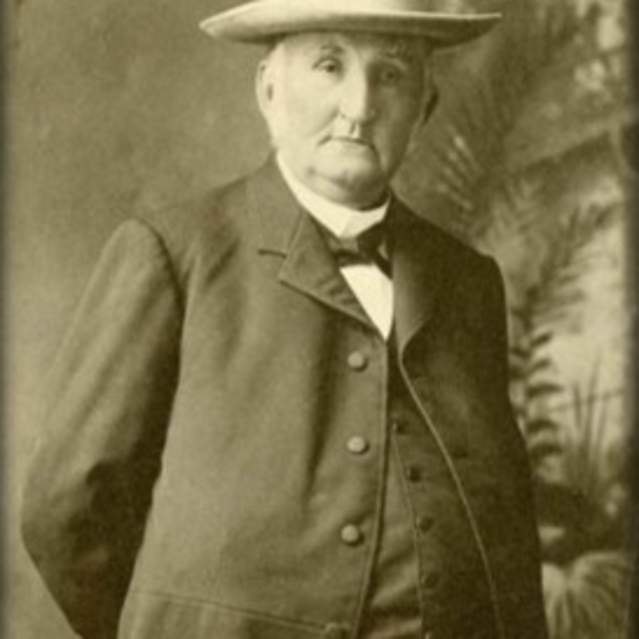
Perez Dickinson was born in the college town of Amherst, Mass., in 1813. He attended Amherst, but then saw opportunities in Knoxville. Two of Dickinson’s sisters had married prominent Knoxvillians, including Joseph Estabrook, whose college looked like it had legs. Dickinson finished his degree at ETC, and served briefly in academia as principal of a boys’ school here, but was soon lured into business by another brother in law, James Cowan, and the two formed the partnership of Cowan & Dickinson, becoming two of the successful “merchant princes” of the era.
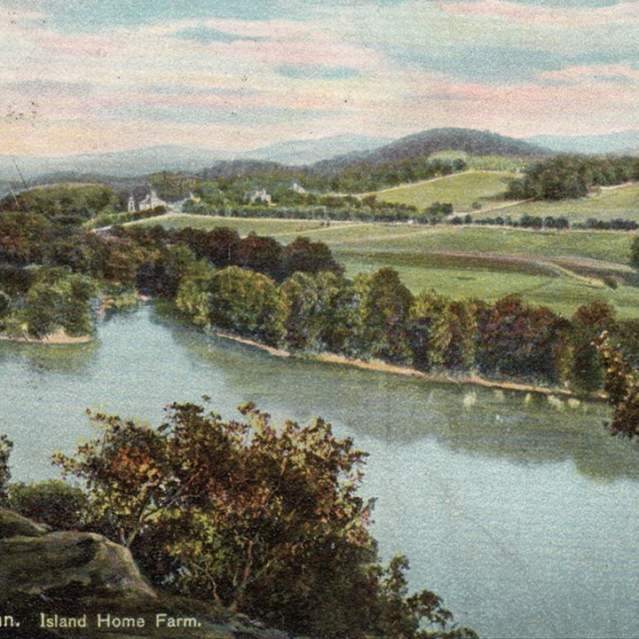
Dickinson returned home to Massachusetts to marry a young woman from New Braintree—the wedding was in Boston—and brought her back to Knoxville. Susan Penniman Dickinson loved their rides in the country, especially on the south side of the river. After she died tragically young, and though Perez outlived her by more than half a century, he never remarried. But he remembered her when he created his model farm, which he called Island Home, on a stretch of the south side of the river that his wife loved. Dickinson became Knoxville’s host, welcoming visitors to behold his gardens and farms. In the 1880s and ‘90s, Dickinson’s Island Home was the city’s most famous tourist attraction. Today, parts of the site belong to Ijams Nature Center, the Tennessee School of the Deaf (where the house Dickinson built for receptions is used by the administration—and of course the Island Home neighborhood, developed in the early 20th century, soon after the Massachusetts native’s death in 1901.
The long, broad Tennessee River island adjacent to that area is still known as Dickinson Island, and is home to the main private airport in Knoxville, the Downtown Island Airport.
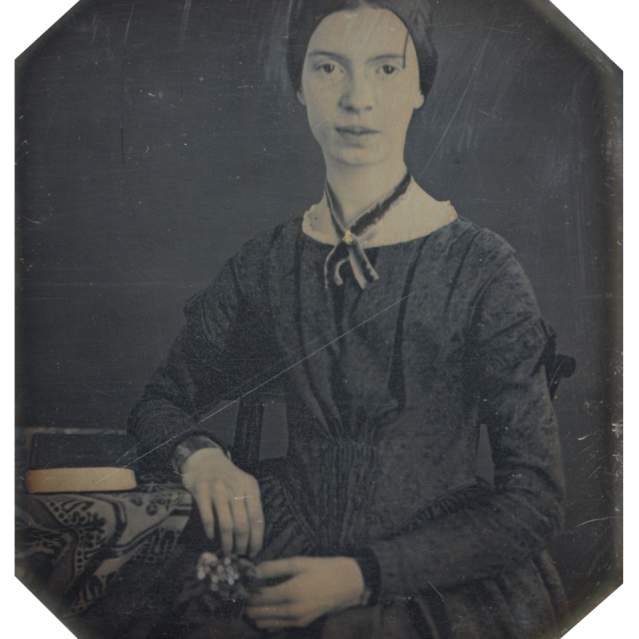
By the way, if pairing the names Dickinson and Amherst rings a bell, you may be recall high-school English-class discussions of “the Belle of Amherst”—who was, of course, poet Emily Dickinson. She was a younger first cousin of Perez and his sisters, and considering that Perez visited home on several occasions, and lived there during the chaos of the Civil War, they would have known each other. Biographers doubt century-old claims that she ever visited Knoxville, but Emily Dickinson is known to have carried on correspondence with some of her Knoxville cousins, including the Cowans.
How many people know that Maynardville, birthplace of Roy Acuff and famous for breeding several country musicians and for a mention of Quentin Tarantino’s Inglourious Bastards, is named for an intellectual from Massachusetts? One who moreover was once an ambassador to the Ottoman Empire?
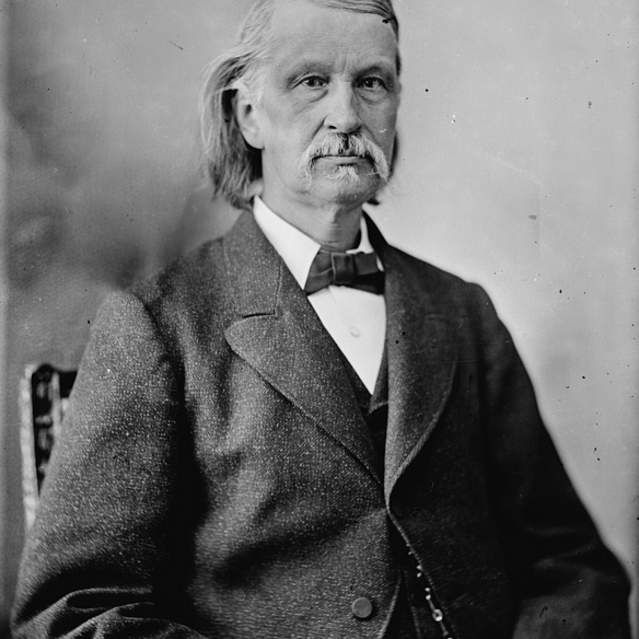
Horace Maynard, born in Westboro, Mass., in 1814, graduated from Amherst, and came to Knoxville in 1838 to teach math at his fellow former Massachusetts resident Joseph Estabrook’s college on the Hill. However, he soon became more interested in law, politics, and literature. Serving as a lawyer based in Knoxville, he helped Union County secede from Knox County, hence his honor in the name of that county seat. Elected to represent Tennessee’s second district in Congress, Maynard was first a pro-Union Whig, and remarkably during the first half of the Civil War, he kept representing his district in Washington, reputedly the only congressman from a Confederate state to do so. Later, he served as President U.S. Grant’s ambassador to the Ottoman Empire, serving in Constantinople (later Istanbul). Later still, he served as U.S. Postmaster General. All the while, he maintained his home in downtown Knoxville, on Main Street.
James C. Moses was born in New Hampshire, but moved to the Bay State to begin a career in journalism as a printer for the Boston Mercantile Journal, where he worked for some years. Early in his career, Perez Dickinson got interested in running a newspaper, and went to Boston to recruit Moses to come south. Moses became well known here, as publisher of two newspapers, the Times and the Register, which he combined for a while.
His younger brother, John L. Moses, joined him here, and by the 1840s these two New Englanders were among the best-known newspaper editors in East Tennessee. It was a significant time, because it was an era when rumors of a traditional New England holiday called Thanksgiving, little known south of New York, started making the rounds in Tennessee. The Moses brothers encouraged the effort, politely correcting a Nashville proposal to observe Thanksgiving on a Sunday in December. Thanksgiving, they said in 1847, was properly celebrated on a Thursday in November. They encouraged the holiday’s “universal adoption.”
It may be surprising that the Moses brothers were disappointed to find no Baptist church operating in Knoxville proper. They’re regarded as co-founders of Knoxville’s First Baptist Church. Believe it or not, it was a couple of journalists from New England who introduced the Baptist faith to Knoxville, Tennessee.
James C. Moses was later one of the planners of Market Square in 1854, and likely used memories of how a functional farmers’ market like Boston’s Faneuil Hall operated.
So despite the distance, people from Massachusetts brought us newspaper journalism, Island Home, the Henley Bridge, First Baptist, and Maynardville, not to mention the Knox in Knoxville. It’s not clear UT would have lasted without Bay Staters. Even Market Square might have looked different.
Editor's Note:Curious to explore some of the places connected to Knoxville's early history? Several locations mentioned in this story remain part of the city today.
Blount Mansion: Discover the home of William Blount, governor of the Southwest Territory, and learn about Knoxville's early days as a territorial capital.
Henley Street and Henley Bridge: Named for Revolutionary War veteran David Henley, these familiar Knoxville landmarks carry a connection to Massachusetts.
Market Square: Explore a downtown gathering place established in 1854, with ties to newspaper publisher James C. Moses.
Ijams Nature Center: Explore the natural beauty of the Island Home area, where Perez Dickinson once welcomed visitors to his celebrated gardens and farm.
University of Tennessee's The Hill: Walk through a historic campus shaped in part by educators with ties to Massachusetts.
Jack is the Executive Director of the Knoxville History Project, an educational nonprofit whose mission is to research and promote the history of Knoxville. He is a journalist who has been writing about his hometown’s character and heritage for many years. He has written several books about Knoxville and its history, and they can be purchased in various places throughout the city including Union Avenue Books and the Visit Knoxville Gift Shop.