Knoxville may be a rarity in that it’s home to two historic houses that are associated with the ends of what were once passionate love affairs.
One of them is the 1941 Lyons View mansion of Eugenia Williams. After an extensive six-year renovation by the Aslan Foundation, it will be open to the public, for limited programs and events, this spring. Eugenia Williams (1900-1998) is remembered in the popular imagination as a solitary recluse. But back in the 1920s, she was an affluent young married woman who frequently traveled with her husband, Gordon Chandler, son of a police chief, a World War I airman who loved hunting and fishing and gambling, who sometimes showed some ambition. A sometime insurance man, he was also interested in his community, and once ran for county government.
They married with minimal fanfare at the Fifth Avenue Presbyterian Church in 1920, and settled into a stylish apartment building on Hill Avenue, overlooking the river.
Their jazz-age marriage lasted for 15 years, and seems to have had its bright spots. They often traveled together, especially extended trips to big cities. Shopping in the trendiest boutiques in New York, Eugenia drew attention when she walked around downtown Knoxville in the latest fashions.
In terms of their ages and the timing of their weddings and divorces, the Chandlers’ marriage lines up almost exactly with that of a famous American love story, the 15-year marriage of novelists F. Scott and Zelda Fitzgerald. It’s unknown whether those two couples ever encountered each other, but it’s not impossible; they were all affluent young people with Southern connections who spent a lot of time in New York.
Both couples split up around 1935. We don’t know what happened in her case, but Eugenia was an extraordinary survivor. With her divorce, she ceased life as “Mrs. Gordon Chandler,” as she was known on the Society page, and became, convincingly, “Miss Eugenia Williams”—as she had been known as a girl.
One of her first actions as a divorcee was to tear down her father’s 20-year-old house on Lyons View. She built a three-stall stable, then called Knoxville-born Houston architect John Fanz Staub, most famous for his mansions for Texas millionaires, to come back to his hometown of Knoxville and design something unlike anything else in town. The Lyons View mansion took two years to build, and was completed in 1941. Gordon Chandler, remarried with children and living only a couple of miles away, probably never saw the big house except from the road.
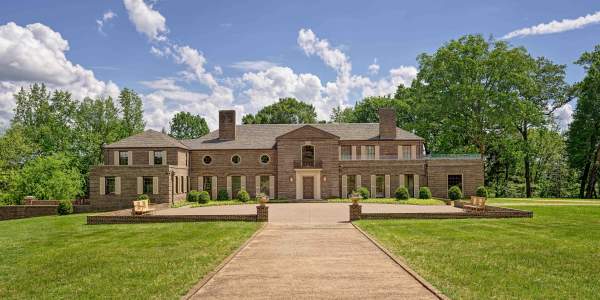
For the next 40-odd years she lived here in her 10,600-square foot Regency Revival mansion, mostly alone, but often in the company of a slightly older boyfriend or fiancé, though no man was ever reported as a resident of that house. They were said to go out on dates, to modest places like the piano beer joint known as the Corner Lounge on Central, but unrecognized. Despite her interest in fashion, she never allowed her picture to appear in newspapers. Everyone in Knoxville knew her name, but no one knew what Eugenia looked like.
Gordon might have seemed to have a perfectly happy life, with wife and children, but he died in his 50s, of cirrhosis of the liver. Eugenia outlived her former husband by more than 40 years.
Beginning this spring, we can see her home, painstakingly restored as she knew it in 1941, through an ongoing series of events hosted by Aslan and Laura Still of Knoxville Walking Tours, as well as the Knoxville History Project, which will have monthly coffees there, and other nonprofit organizations. There’s still much we don’t know about the mysterious grand dame of Lyons View.
It’s interesting that one of her few social acquaintances of Eugenia’s early young adulthood was another woman always identified with the honorific “Miss”—Miss Evelyn Hazen.
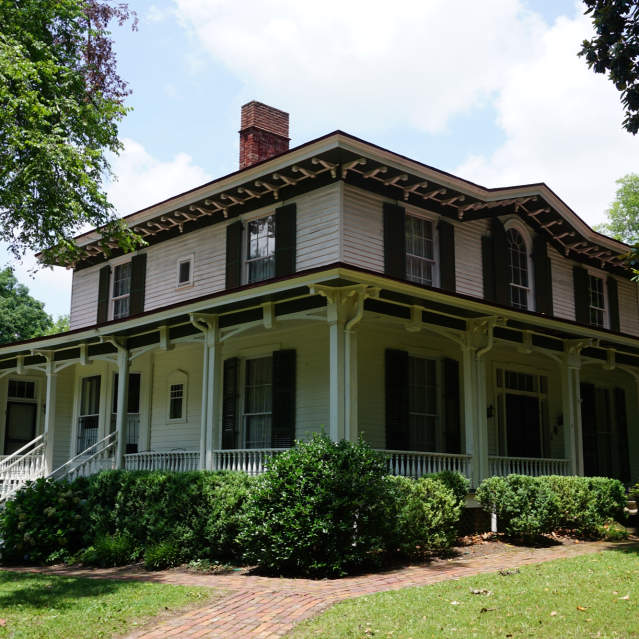
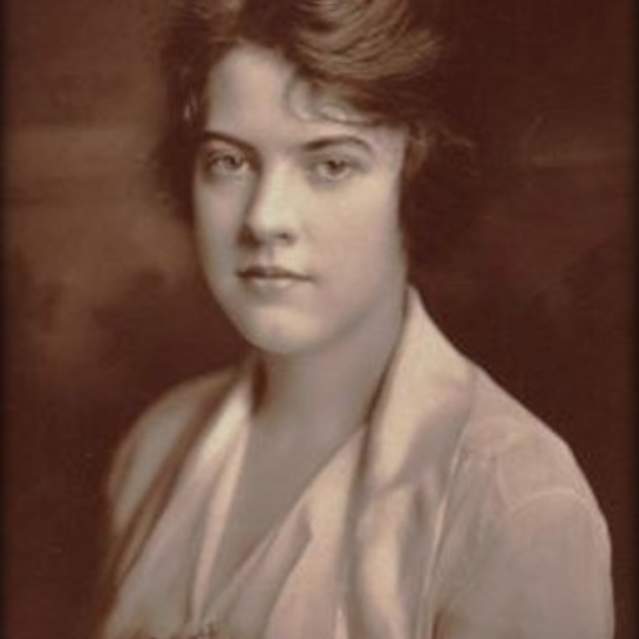
"Miss Evelyn,” as she’s always known, as if to emphasize that she never married—was born into an affluent but once tempestuous family. She didn’t know her violent forbears personally, because all the gunplay happened more than 15 years before she was born. But to make a long story short, her grandfather and two uncles, each of them named Mabry, were all killed in two different gunfights on Gay Street. The one in 1882 merited national news, because it was a rare duel in which all three combatants were killed.
Evelyn lived in a different century, though, with calm, responsible parents who showed no propensity toward violence. We had no reason to expect that her personal life would ever make national headlines, as her rowdy male relatives’ lives had.
After all, her parents, the Hazens, were successful, quietly respectable people. So, in fact, were the Scharringhauses. A prominent manufacturer of menswear, Edward H. Scharringhaus was a leader in several respectable businesses and causes. Originally from a German family in the Cincinnati area, he was a founding member of Knoxville’s Rotary Club, a leader of the YMCA, and prominent in the Chamber of Commerce. Back in 1910, had helped make the Appalachian Exposition a reality, bigger than any promotional fair before it. He was also a churchman, a Sunday School teacher at Fifth Avenue Presbyterian.
His son Ralph Scharringhaus was a bright student who seemed set up to follow in his father’s footsteps, but with aspirations toward the arts. He was an officer in the Knoxville High School Literary Society, and sang in the KHS Musical Club. He was an actor in the senior play, Tangle of the Tango Tea, portraying an English nobleman in love. He attended UT, and continued acting there, too. In May 1916, he starred in a UT production called Regiment of Two, produced at Staub’s Theatre on Gay Street. Appearing opposite him on the stage was a young woman who would overshadow the rest of his life.
“Miss Evelyn Hazen is a pretty picture as the young wife and has a splendid stage presence,” reported the Sentinel.
He was five years older but the two began dating. The following year, Scharringhaus left the university to join the army during World War I, and saw active service in France as a lieutenant in the Infantry. It was just before he left that he reputedly “seduced” Miss Evelyn. From a devoutly conservative family, she had little interest in sexual adventures, but yielded to her ardent lover that she considered her fiancé who was bravely going off to war.
After the Army, Ralph was back in 1919, to graduate from UT with a practical-sounding degree in “Commerce.” Ralph worked for his dad’s venerable menswear firm, Gillespie, Shields & Co., and also worked as a bank officer. Evelyn found work as a schoolteacher at Knoxville High. (She was teaching English there when future journalist and novelist James Agee was a student.) He and Evelyn became a familiar couple, formally dressed at cotillion dances at Cherokee Country Club in the 1920s.
But they never married. Ralph said he considered them already married, and didn’t need a ceremony to prove it. It was a point of view becoming more common in the Jazz Age. And by the time they were in their 30s, Ralph was showing interest in other women. What had started between Evelyn and Ralph seems to have ended, utterly, in 1932, when Ralph admitted he was no longer interested in marrying her.
Within a year, it was national news. By a complaint filed in circuit court in Knoxville in 1933, “the plaintiff had submitted to the carnal desires of the defendant,” who then broke his promise that they would marry. She sued him for breach of promise. By her parents’ Victorian standards, she was “ruined” for any other man. For her, it was Ralph or nobody.
The trial was held in Covington, Ky., an old Scharringhaus family home to which Ralph seems to have fled—it also offered a change of venue from a city where everybody already had an opinion. Evelyn’s evidence presented in public court included more than 100 passionate letters from Ralph, as well as her own accounts of exactly what they did together, most of it vividly there in the old house her grandfather had built in 1857. By then, romantic breach-of-promise suits were unusual. It got attention in dozens of newspapers across the country. Headlines termed it a “heartbalm” case. But she was convincing. She won a judgment of $80,000—that would be the equivalent of close to $2 million today.
“The very size of the verdict makes it void,” claimed Scharringhaus’s attorney, John Jennings—who, four years later, would be elected Republican congressman from the Second District. It’s unknown, and by some accounts unlikely, that she collected anything.
Even after physical details of this whole love affair came to light, private details most of us never hear about each other even in our social-media era, the two former lovers both stayed in Knoxville, perhaps uncomfortably, for the rest of their lives. If Scharringhaus ever had any ambition, the knowledge that money he earned might be owed to his old girlfriend may have sapped it. This son of a prosperous industrialist who had been characterized as a manufacturing executive and a banker spent the next couple of decades working as a used-car salesman on North Central. He remarried, to a woman from Crossville who became a leading volunteer for the Red Cross. He had shifted to the insurance business before he retired.
Due to the scandal, Evelyn was considered unfit to teach children in public school. But she did get an important job as a secretary to Professor John C. Hodges, UT’s famous literary scholar and grammarian. Their offices were in the Hoskins Library, the Gothic revival brick building that still stands on Cumberland Avenue, at the foot of UT’s Hill. She was devoted to Hodges and his work. She liked him, and she liked rules, and helped him put together what became known nationally as the Hodges-Harbrace Handbook of English grammar.
After Hodges died in 1967, Evelyn retired to the family home built by her grandfather, Joseph Mabry—the one shot to death, along with his son, back in 1882. Like Eugenia, she outlived her local relatives.
You can see the house today; it’s a museum house known as the Mabry-Hazen House. There they tell the stories of success and scandal. In fact, in honor of Valentine’s Day, this year on Feb. 13 and 14, Patrick Hollis is leading the “Rated R for Risque Tour,” with some details of Evelyn’s life you might not have heard if you toured the house 20 years ago.
Evelyn outlived her old friend Ralph by 16 years. Her fate was strangely similar to old friend Eugenia’s. She lived alone in a big house with a view of the river, one often seen but rarely visited. Though mostly alone, she was occasionally involved in the community. She fought against the Urban Renewal that was threatening her neighborhood in the 1960s, and demanded her grandfather’s legacy—Market Square, which he established in 1854—be respected as a farmers’ market, as it is to this day.