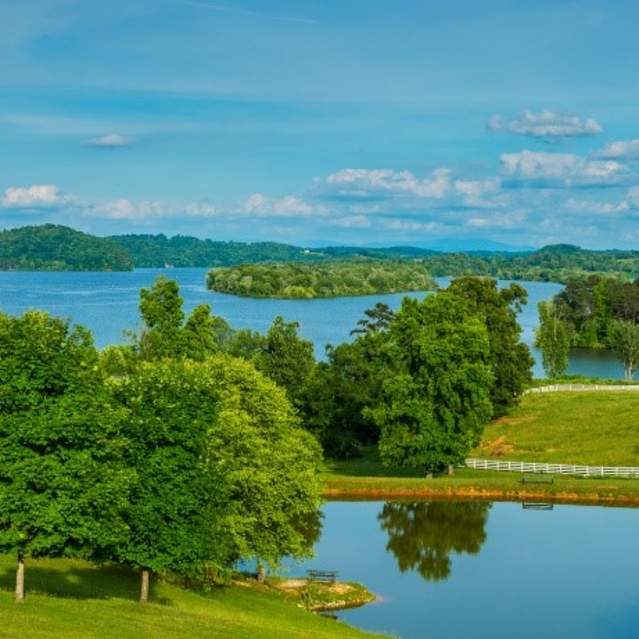
Today, when travelers think of Knoxville, they often think of lake recreation: houseboat parties, pontoon-boat parties, bass fishing, water skiing, marinas, rental lakehouses, waterfront restaurants, lakeside picnics and barbecues. For thousands of Knoxvillians today, that’s a reason to look forward to summer. We crowd Concord Park, and its peninsular western annex, The Cove, go canoeing from First Creek Landing, cruise the hundreds of miles of shoreline within an hour’s drive of downtown. Birdwatchers and other nature lovers spend weekends at shoreline sanctuaries Ijams Nature Center and Seven Island Birding Park. Sometimes we attend concerts and even operas at lakefront sites (the first time Taylor Swift performed in the Knoxville area, 20 years ago this July, it was from a floating stage on Fort Loudoun Lake!)
Of course, the water was always part of the city’s appeal. The Tennessee River was a big reason we put a city here, back in 1791. But for the city’s first 150 years or so, there were few if any lakes in sight. This was a region of swift-flowing and unpredictable rivers.
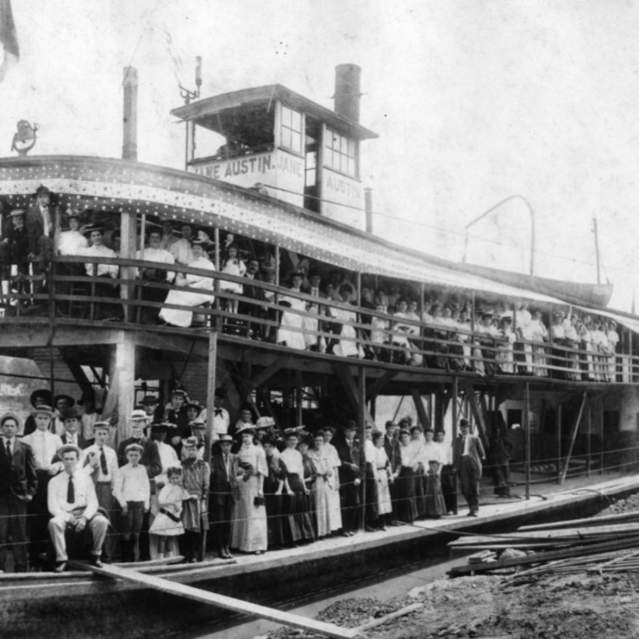
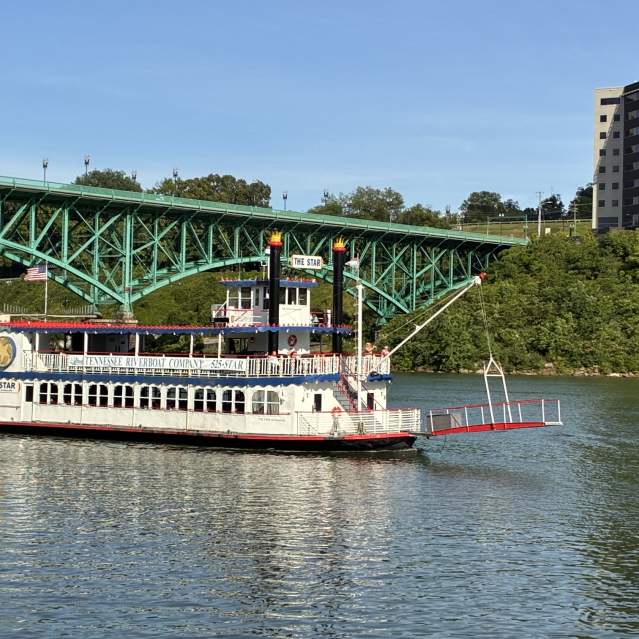
Knoxville sits at the source of the 652-mile-long Tennessee River, formed by the junction of the Holston, which flows from West Virginia, and the French Broad, which originates in North Carolina. Pioneer flatboats were part of the city’s identity in the early days, but they worked best when going downstream. Because of multiple shoals and other hazards on the river’s long route, steam-powered riverboats didn’t arrive until 1828, and were often problematic, working best when the river was high. The worst flood in the city’s history, in early 1867, made an island of downtown. But riverboats and excursion parties, often featuring a live band and a dance floor, was a big part of the social scene in the late 19th and very early 20th centuries. Often such excursions would put in at grassy spot, or a river cave, for an impromptu picnic. Others enjoyed taking small boats out for a ride. But Knoxvillians didn’t build houses or businesses by the river’s shore because it so frequently flooded, and though some strong swimmers enjoyed the challenge of the river, the Tennessee’s strong current made it hazardous.
That all changed as a result of the Tennessee Valley Authority.
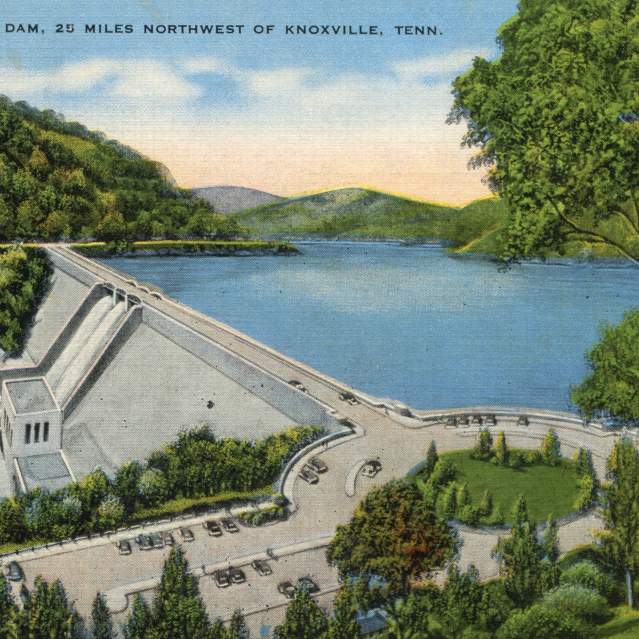
First proposed in the 1920s, partly as a way to get past the shoals of Alabama, dams, reservoirs, and recreational areas became a reality with President Franklin Roosevelt’s New Deal, which launched TVA almost suddenly in 1933, as the seven-state agency first built Norris Dam, on the Clinch River 20 miles north of Knoxville. Norris Lake was a reality in 1936, attracting some high-profile tourists to behold it, including Eleanor Roosevelt, Ernie Pyle, Swiss architect Le Corbusier, India Prime Minister Jawaharlal Nehru, Jean-Paul Sartre—who visited in early 1945 to report on America’s war industry for the French press. That proximity was a factor in placing TVA’s headquarters in Knoxville, the nearest city to its most famous project. But it also introduced the concept of lake life. The region’s biggest Girl Scouts facility, Camp Tanasi, has charmed generations of girls on the shores of Norris Lake since 1957.
Norris Lake became a magnet for fishermen, boaters, and lake-house builders. But it was just the first. Cherokee Lake, Watts Bar Lake, and Douglas Lake followed in the early 1940s, some of them hydroelectric projects hurried up to aid in the wartime power supply. TVA is still in charge of much of it, but called an end to its famous dam-building period about 50 years ago. Melton Hill Lake (1963) and Tellico Lake (1979) were relative latecomers.
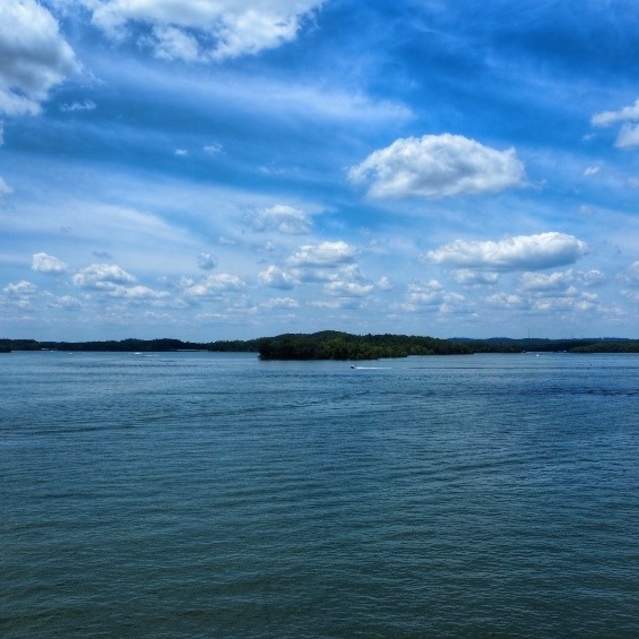
Fort Loudoun Lake, created by a dam completed in the summer of 1943, is Knoxville’s most familiar reservoir. Flooding thousands of acres of former pastureland, the new lake created more than 300 miles of shoreline, including countless inlets. It was the beginning of a new industry in public boat docks—later called “marinas”—often with bars or restaurants attached. Knoxville proper is in that TVA reservoir’s upper reaches, so much so that some locals routinely refer to the Tennessee River in Knoxville as “Fort Loudoun Lake.” But the broad, deep lake is much more evident on the west side of town, in the Concord area, where on a summer day at Concord Park, founded about 80 years ago but much expanded over the years, can seem positively nautical, offering views of what can appear to be a coastal bay, navigated by motorboats, canoes, and sailboats.
By 1960 there was a reported inland fleet of 50,000 boats of all sizes, from houseboats to pleasure cruisers to fishing skiffs, on the lakes within a 30-mile radius of Knoxville. Sea Ray Boats, a manufacturer of pleasure cruisers, eventually established its national headquarters in Knoxville.
On a visit in 1940, President Franklin Roosevelt may not have been kidding when he noted, “This chain of man-made inland seas may well be named ‘the Great Lakes of the South.” They’ve certainly created some of our favorite settings for summertime in East Tennessee.
Illustrations and captions:
The Jane Austin steamer at Knoxville, 1910. (McClung Historical Collection.)
Norris Dam postcard, circa 1940s. (KHP.)
Star of Knoxville on Fort Loudoun Lake, 2025. (KHP.)
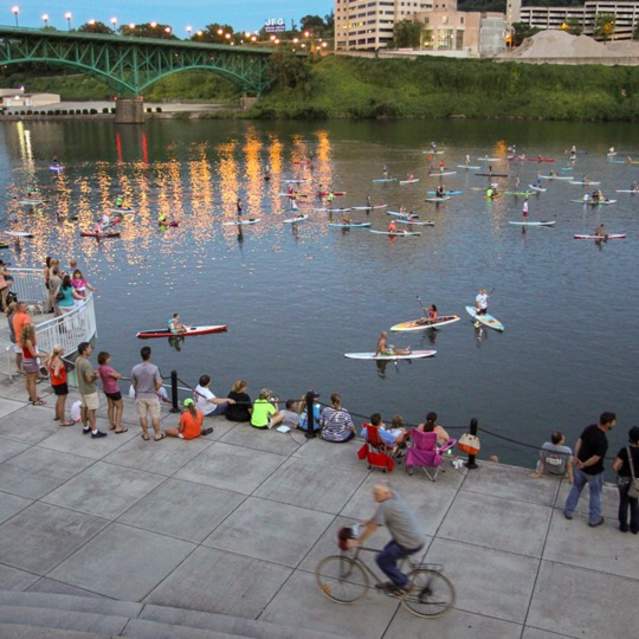
Volunteer Landing. (Legacy Park Foundation.)
Author
Jack Neely
Jack is the Executive Director of the Knoxville History Project, an educational nonprofit whose mission is to research and promote the history of Knoxville. He is a journalist who has been writing about his hometown’s character and heritage for many years. He has written several books about Knoxville and its history, and they can be purchased in various places throughout the city including Union Avenue Books and the Visit Knoxville Gift Shop.