August 19 is Aviation Day, and as McGhee Tyson Airport approaches its 90th year at its big riverside location in Blount County, it may be interesting to remember how it all came together.
It all begins with that unique name. Of Tennessee’s largest cities, Knoxville is the only one that doesn’t include its name in its airport, known for decades to baggage handlers as “TYS.”
McGhee Tyson isn’t named for two different families, as many travelers assume. They’re not places, either. It’s named for one individual, and one who never saw a passenger airport in his short life.
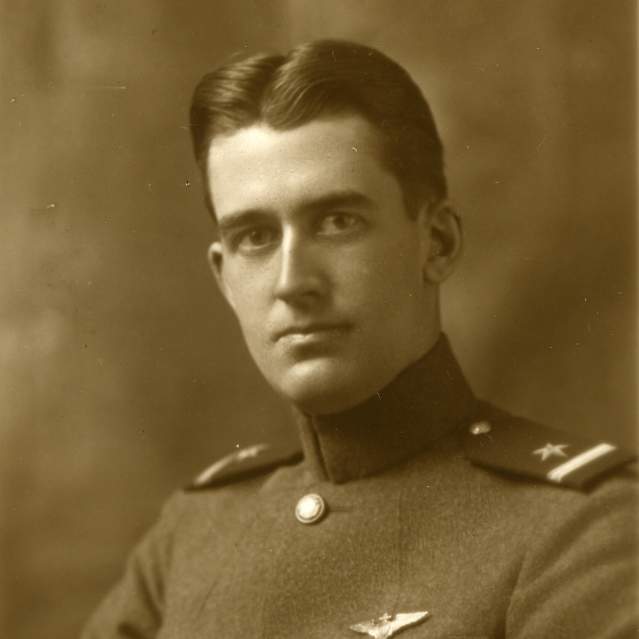
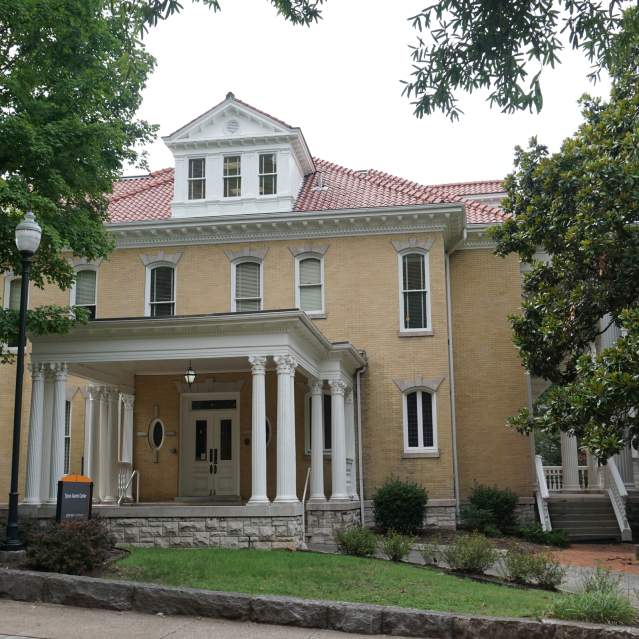
His first name was Charles, but everyone knew him by his middle name. “Fascinating McGhee,” as some of his envious friends in early 20th-century Knoxville called him, was a handsome, charismatic, and wealthy young man about town. He spent much of his youth in schools of the northeast, graduating from Princeton in 1912, the year before F. Scott Fitzgerald got there. But when he was home, he lived in the big house with Corinthian columns that still stands on UT’s Volunteer Boulevard (when it was called Temple Avenue, in a neighborhood not yet part of any university campus). In that Edwardian era, he was often mentioned in the newspapers as a lively young socialite bachelor at Cherokee Country Club, especially as a golfing champion. He didn’t lose many matches, but one of them, in 1916, was to a visiting 14-year-old phenomenon from Atlanta named Bobby Jones, at the very beginning of an astonishing career.
But how golfer McGhee Tyson’s name got applied to an airport that might otherwise be called the “Knoxville Airport” is our question.
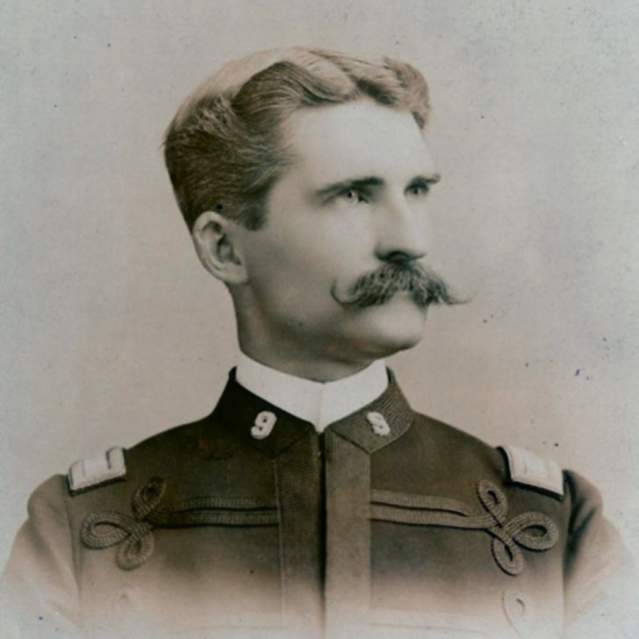
McGhee Tyson’s father, Brig. Gen. Lawrence Davis Tyson, from his youth a veteran of the wars with the Apaches and the Spanish-American War, was a high achiever in Knoxville, a textile industrialist, attorney, politician, and military-science professor. In 1917, he joined the war effort, commanding troops in combat in France.
Many young men of that era were fascinated with flying. In July 1917, McGhee Tyson joined the “flying corps,” trainees who went to Boston to learn to fly in combat for the Navy. Officially he was in the U.S. Naval Reserve Force. But while his famous father was directing fierce combat in the trenches of Europe, McGhee was hanging around between Knoxville and New York. He did time at air bases in Fort Worth and Pensacola, but was still attending parties and receptions in the society pages. In June 1918, McGhee surprised some old Knoxville girlfriends where he married a New York society debutante named Betty Carson.
Late that summer he was back in Knoxville, introducing his bride to his friends and family. He had been training to fly for the Navy for a year, but even as his 57-year-old father was in the thick of battle, young McGhee hadn’t been sent overseas yet. There’s a story that he saw an aviation movie on Gay Street that kindled his urge to get involved in the fray. That August, as he turned 29, McGhee Tyson sailed for England. Of course, in 1918, sailing was the only way to get to Europe. No airplane could fly that far.
The next thing Knoxville heard about McGhee was that October, through confused reports that he was missing over the North Sea. He was flying in a seaplane with three other airmen. Whether it was a collision of sea planes patrolling those waters infested with German U-boats, or whether the plane just crashed in the water—or whether it was in combat, as people would claim later—he was at first missing, then presumed dead, one of three lost in that crash.
Meanwhile, his father was on the ground, leading the 30th Division of U.S Infantry, forcing its way through the Hindenburg Line into Belgium, as the allies collectively forced Germany’s surrender. With no time to celebrate the Armistice that ended the war that November, Gen. Tyson hurried to England to help locate his son’s body. Reports imply it was located on the shore some days after the war ended. Gen. Tyson arranged to send his son’s body home for burial at Old Gray Cemetery.
The subject of much grief, this sudden loss of one of Knoxville’s most popular young men inspired several efforts for commemoration. Cherokee Country Club declared they’d name one of the holes in the golf course that young Tyson had helped design for the lost airman. In years to come, there was a McGhee Tyson Golf Tournament at Cherokee, awarded with the McGhee Tyson Cup. Meanwhile, in 1920, McGhee’s parents installed a 36-foot monument of Vermont marble at Old Gray. His final resting place, later shared by both parents, was beneath the tallest monument in the cemetery. It’s clearly visible from Tyson Street, on the northwest corner of downtown. But a much greater honor was yet to come.
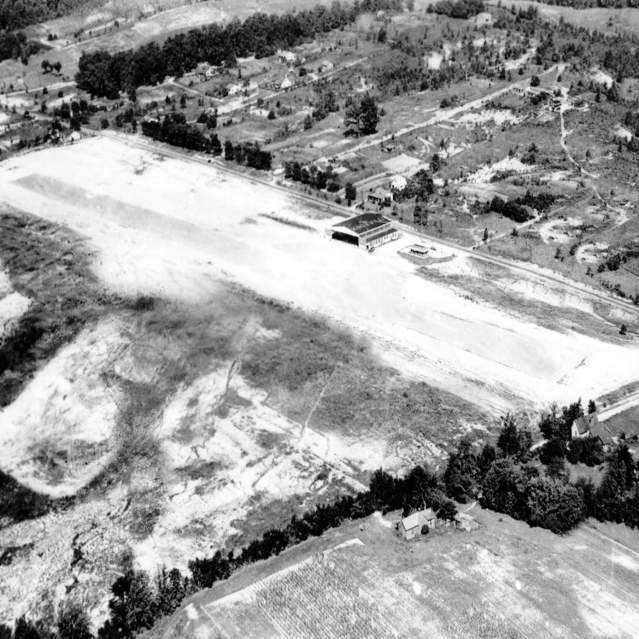
As more fortunate airmen returned home, Army-surplus merchants like Ben Bower sold Jennys, the simple biplanes used in training, for a few hundred dollars each. Several wealthy young Knoxvillians bought the airplanes, and learned to fly them, enough that they established a couple of proper airfields. There were five or six airfields in Knoxville at one time, but the flattest, longest, best known and most used were the ones on broad Dickinson Island in the river just east of downtown—used as an airport for small private planes since the 1920s, it’s called Downtown Island Airport—and the long Aviation Field, also called Bearden Field, alongside Sutherland Avenue on the west side of town. By the late 1920s, it was a well-used field, just as discussions gathered about the fact that Knoxville would need a municipal airport, and the sooner the better.
What happened next was a complex arrangement that was said to be his mother Bettie Tyson’s idea.
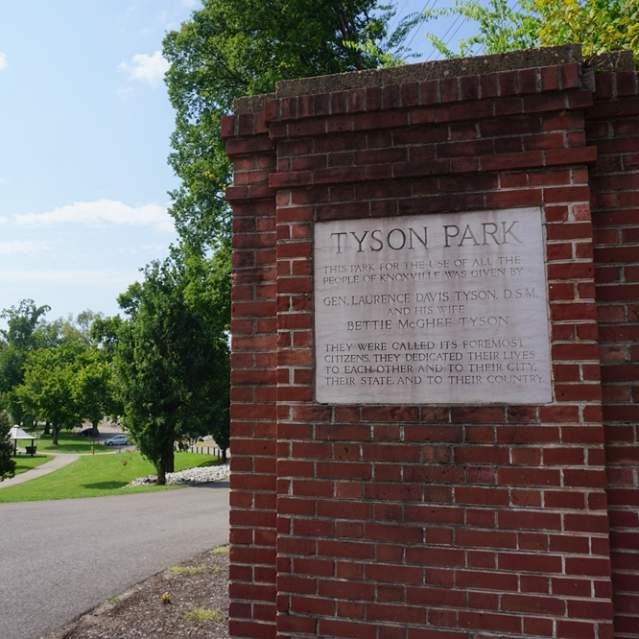
A well-known philanthropist and socialite whose ancestors had been among Knoxville’s founders, Bettie Tyson had been the leading champion of Knoxville’s “City Beautiful” movement, attempting to improve the appearance of a city better known for industrial products than its looks. There was green land along the floodplain of Third Creek, not far from UT’s agricultural campus, that had once been used for a nine-hole golf course, one of the city’s first. The Tysons bought the property, with the idea of donating it for a 39-acre public park as a permanent memorial to their son. They announced the gift in 1921. A conservative city administration declined the gift, concerned about maintenance, but it remained in the air, so to speak.
Meanwhile, Gen. Tyson, now a war hero, was elected to the U.S. Senate. Then Sen. Tyson died suddenly in 1929—and the city finally accepted the parkland on Third Creek as a municipal park. Soon afterward came proposals that the city name Bearden Field for McGhee Tyson, as there emerged an offer from Bettie Tyson to sell parts of Tyson Park to help leverage the construction of an airport named for her son.
The relationship of McGhee Tyson Airport and Tyson Park is complicated and may not have been publicly understood until after Bettie Tyson’s death in May 1933—she was the last surviving member of the Tyson family to live in Knoxville—but by the mid-1930s, the newspapers were reporting that her gift of Tyson Park came with an unusual stipulation. It mandated that the city’s municipal airport always bear their son’s name.
After 1929, the original 50-acre McGhee Tyson Airport on Sutherland Avenue was officially the city’s main airport, though most if not all of the flights that took off there were small private planes. It was so close to the center of town that some downtown businesses painted helpful arrows on their roofs to guide pilots to that safe place to land.
In that airport’s short history, though, aviation was changing rapidly, as there came talk of much bigger, faster airplanes, and even passenger airlines. By 1935, federal officials declared the original McGhee Tyson Airport unsuitable for modern aviation, prompting a proposal to make it another, larger Tyson Park, as an extraordinary westward extension of the original Tyson Park. (Meanwhile, Tyson Junior High School opened in 1937, adjacent to Tyson Park, but reportedly a memorial to all three of the deceased Tyson family.)
For a moment in the mid-1930s, the best alternative to the Bearden field seemed to be Dickinson Island, the broad river airfield just east of downtown. However, soon the nation’s first big passenger airline, American Airlines representatives, landed some of the company’s early mail planes at Dickinson Island, as well as a small passenger airliner, holding only 14. As American Airlines began working with its larger DC-3 airliners, the company made it clear Knoxville would need a much bigger airport than either of its 1920s fields.
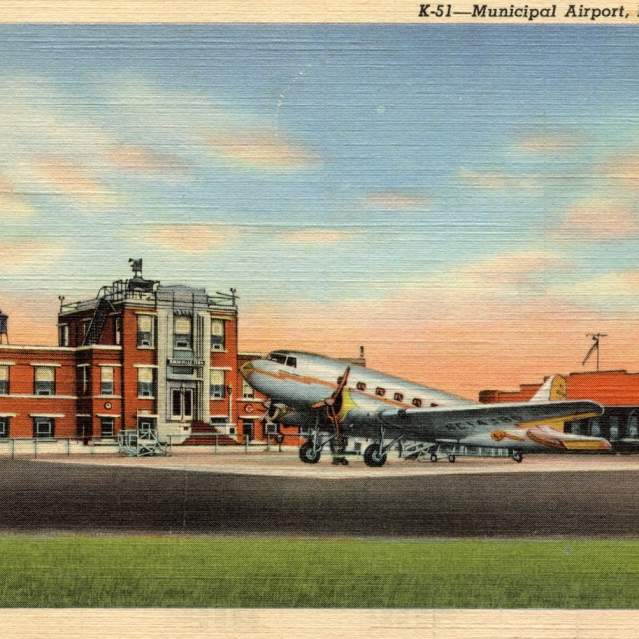
Knoxville finally cooperated with Maryville and Alcoa to establish a much-bigger airport on one of the few large flat places in the metropolitan area, the riverside floodplain in Blount County. Another advantage was that it was on the route of a new highway toward the Smokies; connected to a bridge at the university, it was soon to be called Alcoa Highway. The New Deal’s federal Works Progress Administration (WPA) played a major role in hastening the new airport’s completion.
But what to call it?
Some Blount County leaders resisted the McGhee Tyson mandate, considering the famous Knoxvillian was only one of a few hundred East Tennesseans killed in the war. They suggested something along the lines of “Smoky Mountains Airport,” to recognize its role in connecting the nation to the almost brand-new Great Smoky Mountains National Park. Even Gov. Gordon Browning signed a proclamation that it was to be the “Great Smoky Mountains Airport.”
However, Knoxville’s city manager George Dempster—the hard-nosed industrialist who at about the same moment was introducing to the world his invention, the Dempster Dumpster—and his consulting attorneys insisted that by the terms of the Tyson family’s gift of Tyson Park, Knoxville’s airport had to be called “McGhee Tyson” forever. A Maryville newspaper columnist denounced Dempster as “bull-headed.”
Browning convinced the state legislature to name it “Smoky Mountains Airport,” the name favored by Maryville authorities. However, Knoxville City Council, at City Manager Dempster’s behest, declared it would be called McGhee Tyson Airport. In summer, 1937, Knoxville had the name carved in marble in the original terminal building. At the time, even some prominent Knoxvillians publicly stated their preference for the “Smoky Mountains” name, and up to the day it was dedicated, there were threats of lawsuits. The official opening and dedication of McGhee Tyson Airport came on October 15, 1937, with an extravagant airshow, featuring parachutists and stunts by veteran World War fliers. An honored guest was Isabella Gilpin, a former Knoxvillian who had married and started her own family in northern Virginia, near Washington, D.C. She was McGhee Tyson’s younger sister, and that last surviving member of the energetic and glamourous family who had lived in the Tyson house. She had named her first son, born just months after the war, McGhee Tyson Gilpin; he would serve as an officer in U.S. Army intelligence during World War II.
Missed by most travelers today, there’s a small plaque at the airport honoring Lt. McGhee Tyson. And back at the site of the original McGhee Tyson Airport of 1929-1937, along Sutherland Avenue in near-west Knoxville, is a historical plaque on Tobler Lane explaining the long, flat site, which later became the home of West High School, the Tennessee National Guard’s campus, and public athletic fields. And Tyson Park, after almost a century, remains a popular park near the UT campus, with a creekside bike trail, popular picnic tables, multiple tennis courts, and in recent years a competitive skateboarding park.
For years, attorneys have claimed that an attorney representing the Tyson heirs makes a pro-forma air trip to Knoxville, just to be sure the airport still has its prescribed name. If that ever changed, they say, the city would have to return Tyson Park to the family—which eventually included Drew Gilpin Faust, the author who became the first female president of Harvard University. As of this year, at least, McGhee Tyson Airport is still named for the great uncle she never knew, the handsome young golfer and daring Navy airman who went missing over the North Sea in 1918.
We welcome visitors to Knoxville by: LAND (I-40 and I-75 intersect in Knoxville, making a perfect road trip destination),
SEA (make that river for the Vol Navy),
& AIR (McGhee Tyson Airport offers nonstop flights to 30+ destinations through six airlines)!
Selection of Images & Captions:
Charles McGhee Tyson (1889-1918). (McClung Historical Collection.)
Brig. Gen. Lawrence Davis Tyson (1861-1929). (McClung Historical Collection.)
Bearden Field, circa 1920s. (McClung Historical Collection.)
McGhee Tyson airport in Blount County, circa 1940s. (Alec Riedl Knoxville Postcard Collection/KHP.)
Jack is the Executive Director of the Knoxville History Project, an educational nonprofit whose mission is to research and promote the history of Knoxville. He is a journalist who has been writing about his hometown’s character and heritage for many years. He has written several books about Knoxville and its history, and they can be purchased in various places throughout the city including Union Avenue Books and the Visit Knoxville Gift Shop.