Imagine, if you can, a city that has, within a 25-minute drive on one side, the Oak Ridge National Laboratory, and its associated American Museum of Science and Energy. And equidistant on the opposite side, Dolly Parton’s extravagant and broadly popular theme park, Dollywood. And mountains all around, from Big South Fork and Frozen Head in the Cumberlands, and the Great Smoky Mountains, site of the nation’s most popular national park. In the valley in between is a Tennessee River city endowed with the complex appeal of its region.
Knoxville has several identities. It’s home to the burgeoning University of Tennessee, now with over 40,000 students, about a quarter of them grad students, and one of the largest football stadiums in America. But “college town” is a relatively recent identity. Although UT’s riverside campus is adjacent to downtown Knoxville, the city has its own story as a distinctive American city, now with its own fresh appeal that’s surprising even to lifers. During the 1982 World’s Fair, which sold 11 million tickets in its six-month extravaganza, Knoxville had exactly four downtown hotels. Now it has a dozen, with more to come.
What’s going on here? In some ways, Knoxville is Everycity USA. In fact, several years ago, a professional demographer from George Mason University claimed the “Most Average City” in the United States was Knoxville, Tenn. His research was based on ethnic mix and economic and professional diversity. Some took it as a compliment. Knoxville does have a little bit of everything that you can find in other American cities. But why are all these people coming here? In several ways, Knoxville is unique.
Several well-traveled attendees at music festivals and touring Broadway shows notice something remarkable about Knoxville’s historic downtown. Although Knoxville has seen its share of suburban sprawl—the city stretches about 20 miles to the west—the downtown is extremely compact, and offers pretty much everything.
Arranged on the same grid of narrow streets and short blocks as laid out in 1791, downtown Knoxville is only about twice the acreage it was when it served as President Washington’s capital of the Southwest Territory, later to be capital of Tennessee—a distinction it gave up about 1818.
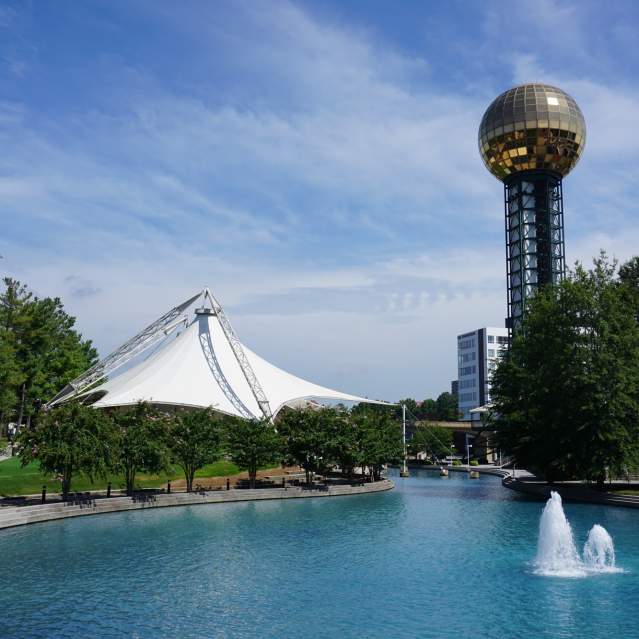
Hardly more than half a square mile, this very walkable downtown somehow contains the historic courthouse and huge modernist courthouse complex, plus federal and state courthouses, as well as the 1854 Market Square, completely occupied and always busy about 20 hours a day even when it’s not market day; two historic theaters (the Tennessee Theatre and the Bijou Theatre) who compete for crowds with multiple live musical, dramatic, or comedy shows every week, as well as an eight-screen cineplex showing the latest movies; five historic churches, plus a couple more on the fringes; six or seven modern banks; a big and well-stocked public library; lots of sidewalk cafes and dozens of the region’s favorite restaurants, several of which have earned national distinctions from MICHELIN or big-city food critics; a pocket park, a long riverfront park, and something few cities anywhere can brag about, an authentic World’s Fair Park; dozens of bars and brewpubs, some of which double as nightclubs with rock, jazz, or country shows; both the historic YMCA and the equally historic YWCA; a live-audience radio studio with regular performances (WDVX inside the Visit Knoxville Visitors Center); several art galleries that host monthly parties, attended by thousands; a global food court; a small glass factory; two historic train stations, one of which is home to a STEM high school; a college of law; event spaces that host everything from high-speed slide shows to elegant fundraisers; an ice-hockey arena (where the Knoxville Ice Bears compete) and, a few blocks away, a cleverly designed baseball and soccer stadium (Covenant Health Park where the Knoxville Smokies, One Knoxville, and One Knoxville Women play); about 5,000 residences—and all those hotels, several of them with their own charms, like big banquet rooms and rooftop bars.
All in a space that’s not a lot bigger than a mall parking lot. Few urban neighborhoods, even in big cities, offer quite so much variety per acre. Naturally it’s a great place for an international music festival like Big Ears, with such a wide variety of venues within easy walking distance. Some people come just to behold downtown Knoxville on a random evening.
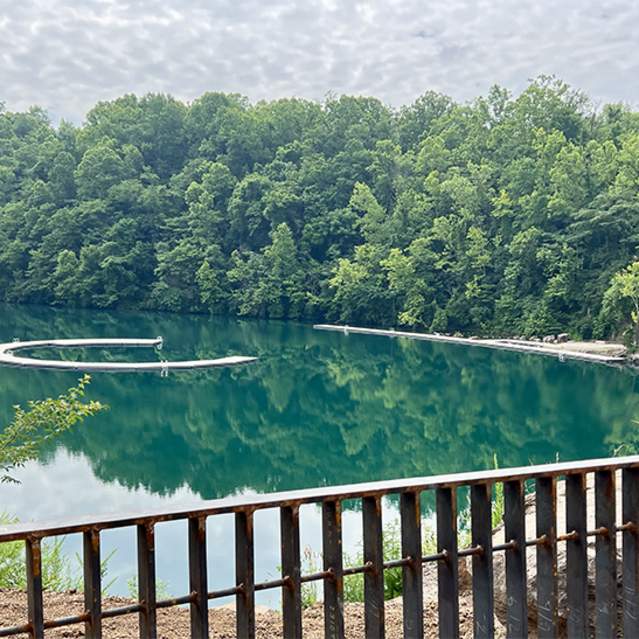
But some of those visitors are planning to venture out of downtown, and that’s when Knoxville gets really surprising. The Urban Wilderness of the south side, parts of it hardly two miles from downtown, is still growing, but what’s there now, a combination of ancient quarries, real Civil War ruins, and lush greenways, is pretty astonishing. Is there anything in the world like Ijams Nature Center? Almost 300 acres of wild greenery, created with both inspired hard work and crazy luck, connecting a historic century-old family riverside bird sanctuary now augmented with three old quarries, one of them deep with water, and all in different stages of being reclaimed by nature, and rugged bike trails that connect it to several other pockets of wildness in the many ravines and hilltops of South Knoxville—which also includes discernible earthen ramparts of Civil War forts, Union Fort Dickerson, forgotten and overgrown but rediscovered in the 1930s—and Fort Higley, obscure for years and known only to the hardiest Civil War enthusiasts, but now a very accessible part of High Ground Park. And in that strip of greenery opposite downtown that retains several Civil War ruins also has that variety of quarries, most of them more than a century old—like the Augusta Quarry at the bottom of the ramparts of 1863’s Fort Dickerson, long a legend, is now our biggest public swimming hole.
For fans of both musical and literary history, Knoxville offers a plenitude of historic sites. Fans of country music can picture the settings of the early careers of Roy Acuff, Chet Atkins, Flatt & Scruggs, the Everly Brothers, and Dolly Parton, among many others. Fans of the very different books left to American literature by James Agee, Frances Hodgson Burnett, Nikki Giovanni, and Cormac McCarthy, all former Knoxvillians, can find the places they described in their works. (Free booklets produced by the Knoxville History Project can help.)
Some people still think of Knoxville as the Gateway to the Smokies—a motto touted about a century ago—or as the Home of the Vols. It’s still those things, but more than ever before, Knoxville is a destination in itself.
Images & Captions:
Regal Cineplex on Gay Street. (Mike O’Neill/Knoxville History Project)
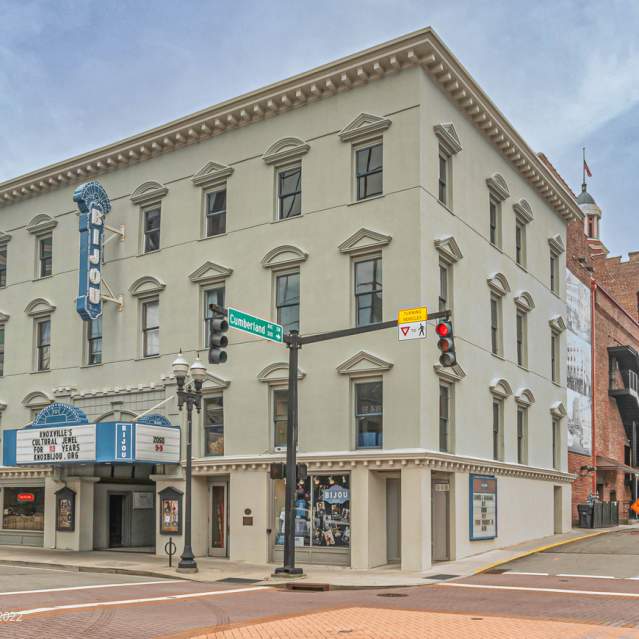
Historic Bijou Theatre on Gay Street. (Mike O’Neill/KHP.)
The old Tennessee School for the Deaf building now houses the Duncan School of Law. (Mike O’Neill for KHP.)
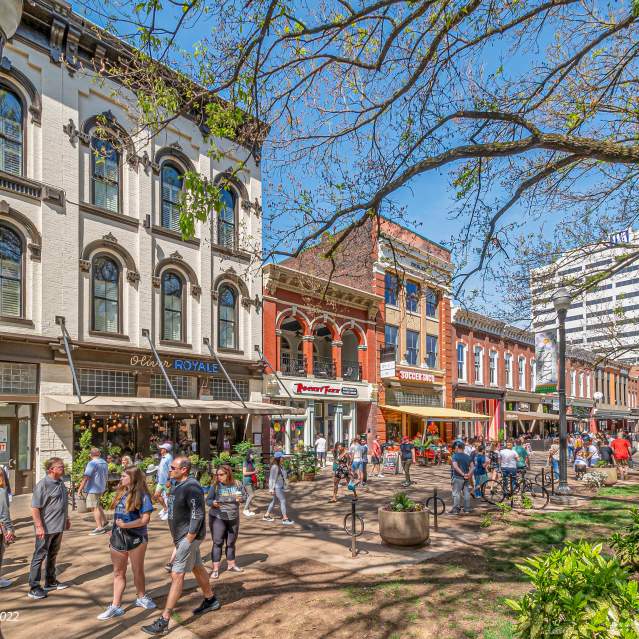
Historic Market Square with the 1876 Kern Building on the left. (Mike O’Neill for KHP.)
Hyatt Place on Gay Street, one of several downtown hotels with a rooftop bar. (Mike O’Neill for KHP.)
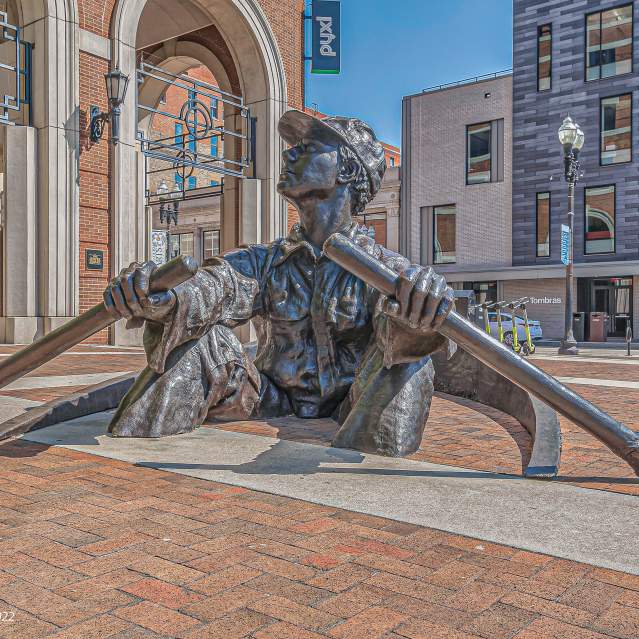
The popular Row Boat Man sculpture at Gay and Church. (Mike O’Neill for KHP.)
Author
Jack Neely
Jack is the Executive Director of the Knoxville History Project, an educational nonprofit whose mission is to research and promote the history of Knoxville. He is a journalist who has been writing about his hometown’s character and heritage for many years. He has written several books about Knoxville and its history, and they can be purchased in various places throughout the city including Union Avenue Books and the Visit Knoxville Gift Shop.