Maybe Thomas Edison and Alexander Graham Bell never lived here, though they did both work with a future UT scientific scholar Brown Ayres, honoree of Ayres Hall, early in his career. Still, for at least 150 years, the city has seen its share of innovative thinkers.
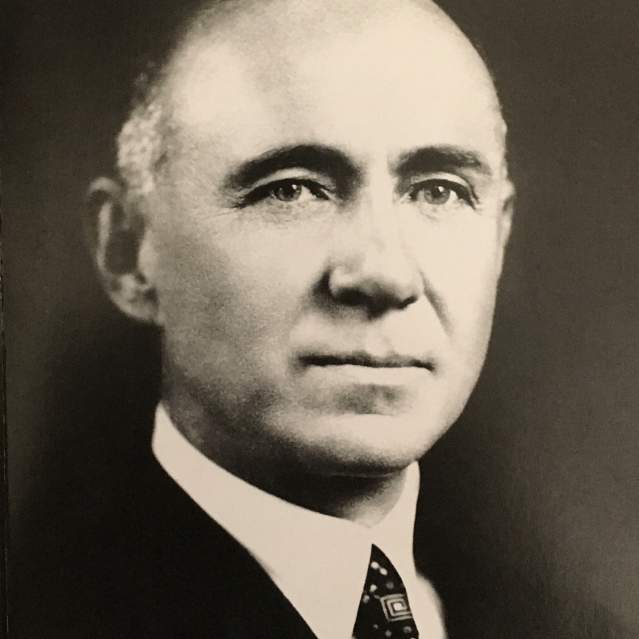
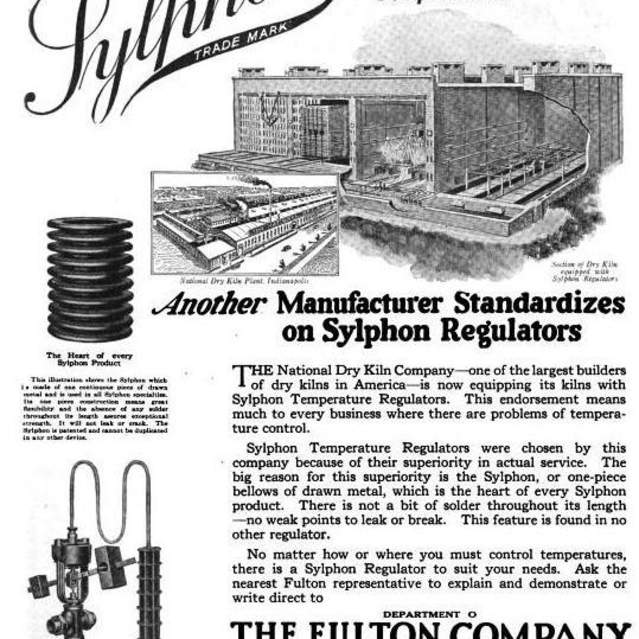
One of the most celebrated in his time was Weston Fulton (1871-1946). Not known to be kin to steamboat inventor Robert Fulton, who lived about a century earlier, our own Fulton began his career as a weatherman, a federal meteorologist who began tinkering with labor-saving ideas to help him report river levels, and created a disarmingly simple device he called theSylphon. Although it didn’t become a household word, the flexible metal bellows, eventually manufactured on a large scale at his plant on the west side of town—located at the site of modern University Commons--found hundreds of uses in everything from depth charges manufactured during both world wars, to automobile air-conditioning. You may have a sylphon in your car and not even know it.
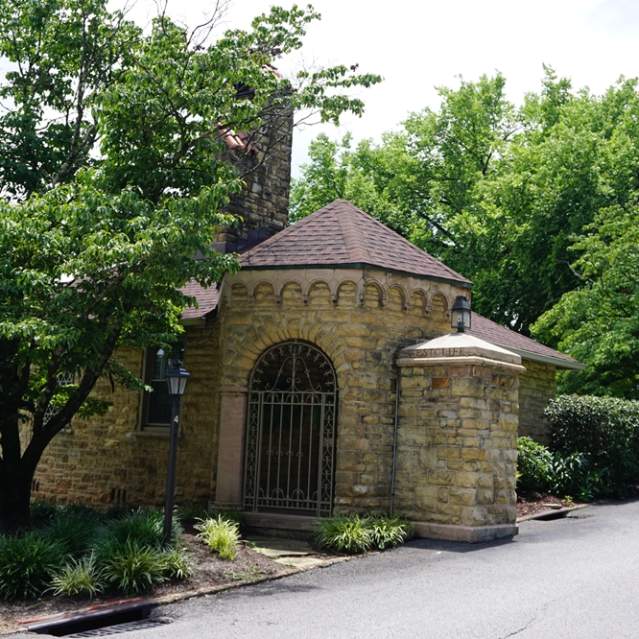
Owner of several patents, Fulton was so successful by the 1920s that he built an extravagant mansion for his family on Lyons View, on the west side of town near what’s now Lakeshore Park. Designed in a Hollywood version of Spanish Colonial style, the mansion didn’t last long after Fulton’s death before it was torn down, but his large gatehouse still stands alongside the road, leading to Westcliff Apartments. Fulton and his family are buried at nearby Highland Memorial beneath a stylishly serene marble monument.
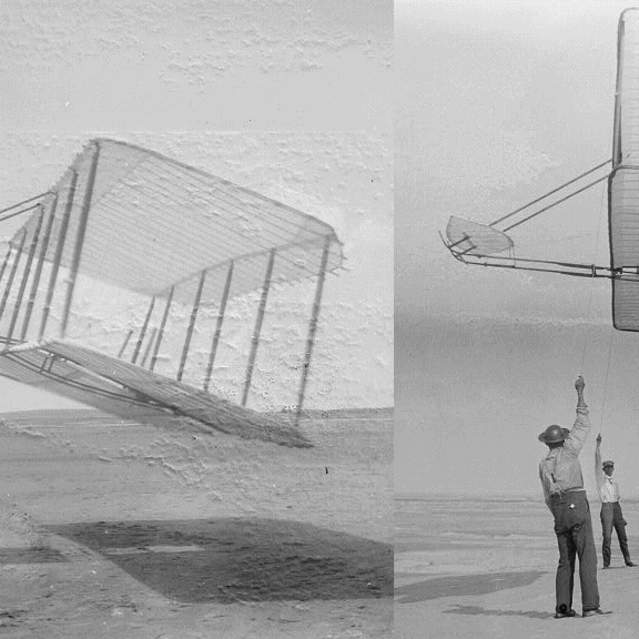
Edward C. Huffaker (1856-1937) grew up on the rural east side of town, along the French Broad River, but agriculture wasn’t for him. Fascinated with the possibilities of aviation, he studied physics at Emory and Henry and the University of Virginia before working with aerial pioneer Samuel Langley of the Smithsonian Institution, who was modeling new designs forgliders, crashing some of them into the Potomac. The two had a falling out, but Huffaker returned to Knox County, where he found the river breezes of home conducive to his model gliders, and continued his own experiments. Applying the well-known Bernoulli Principle to flight, he developed the concept of “wing warp,” suggesting that curvature in wings can offer major advantages in flight, and published papers on the subject.
Especially impressed with Huffaker’s published work were the Wright Brothers, who found it useful in their design. Huffaker actually joined the brothers, who were more than a decade younger than he, at Kitty Hawk in 1901. Although they respected his ideas, in person the eccentric and arrogant Huffaker proved to be a pest, and the Wrights were glad to see him go. But they used some of his insights in developing their first airplanes. Details of his youth are elusive, but he did live in the general area known as Huffaker Ferry Road, just downstream from the beautiful Seven Islands State Birding Park in East Knox County.
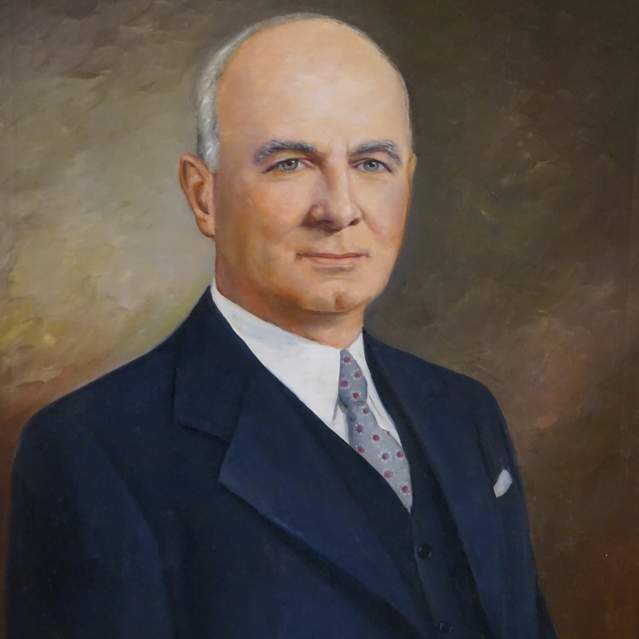
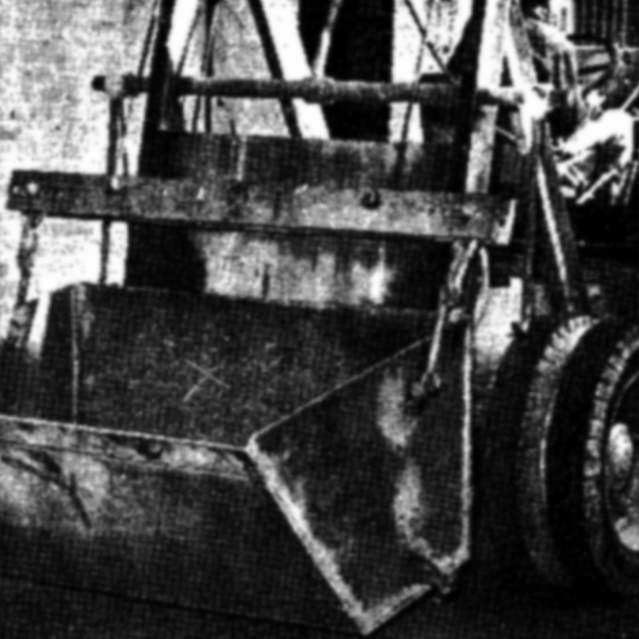
The most famous invention in Knoxville history is one we bet you’re familiar with: the Dumpster. It may seem a simple concept, but before 1936, no one had ever created something so efficient, a metal garbage bin that can be moved by means of a specially designed truck. Its inventor was George Dempster (1887-1964), hardworking son of two British immigrants, was already locally famous, as an industrialist, as Knoxville’s city manager, and as a big shot in the early development of the Smoky Mountains National Park.
He had early inklings of the idea while working as a young man on the Panama Canal project, observing the removal of large amounts of dirt. Later, as the principal of Dempster Brothers Equipment Co., he began playing with an idea with a much broader use. In November 1936, he placed four of the world’s first Dumpsters in an alley between Gay Street and Market, and sat back to see what would happen. Almost instantly, in this city then often criticized for its litter, they filled with trash.
Word got around, as mayors and city managers from around the country came to Knoxville to behold Mr. Dempster’s wonder. He named it, of course, for itself: the Dempster Dumpster was manufactured mainly in Knoxville for the next few decades or so. By the time Dempster was elected mayor of Knoxville in the 1950s, his invention was world famous.
Rarely does a word so quickly become part of the English language. Without George Dempster and his universally useful innovation, Dumpster fires, Dumpster diving, or the popular New Orleans band “Dumpstafunk,” wouldn't exist.
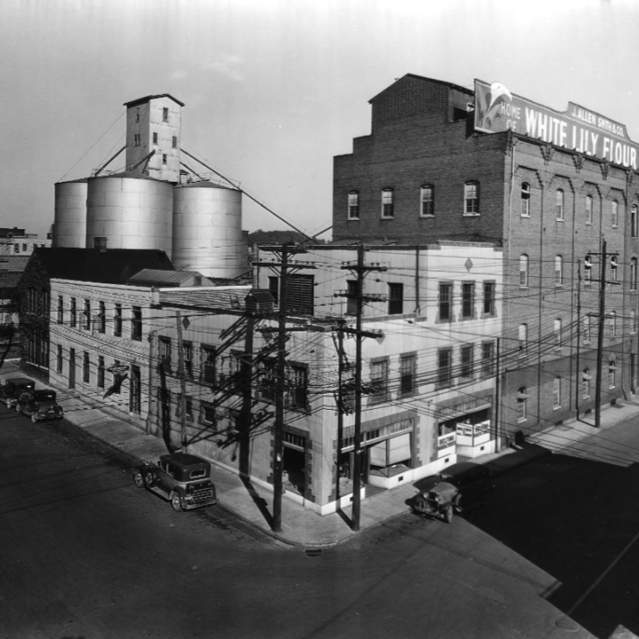
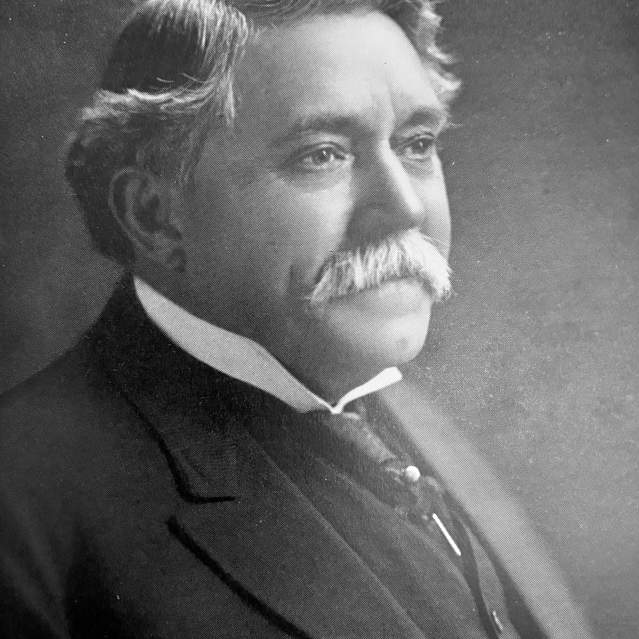
Our foodie culture is such that we shouldn’t forget the culinary innovators. Hard to beat in Knoxville is J. Allen Smith (1850-1925), the Georgia-born entrepreneur who went into the flour-milling business, experimenting with doesn’t different varieties until around 1904, when he happened onto one called White Lily. It became a phenomenon, especially among biscuit makers and cake bakers in the Southeast, but with a great deal of credibility even in the urban north. White Lily Flour was manufactured primarily in Knoxville for over a century, until about 20 years ago, when the big food corporation who bought the company moved the operations to somewhere in the Midwest. You can still buy White Lily, and it’s very good flour, but some bakers regret that it’s not quite the same. The building where it all happened is still standing, on Central Street, on the north side of the Old City. Part of White Lily Lofts is an 1880s building that’s the oldest factory building in the area.
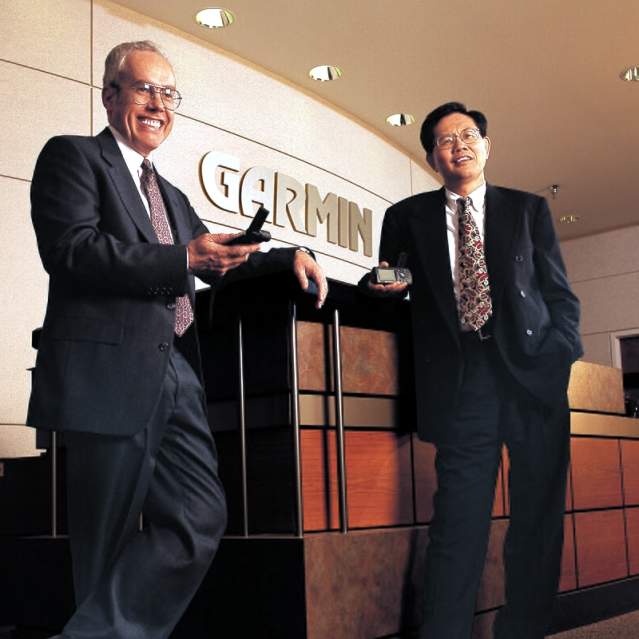
Min Kao (b. 1949), the Taiwanese genius who helped create theGarmin, introduced multiple new approaches to global positioning system technology. Garmin is especially well known in aviation, so much so that Min was recently inducted into the National Aviation Hall of Fame in Dayton, Ohio. (Garmin is a combination of the names of the two innovators, Gary Burrell and Min Kao). Min earned two degrees in electrical engineering at the University of Tennessee, where he received his Ph.D. in 1977. He returned to Knoxville almost 30 years later to endow a major building for engineering; the distinctive Min Kao building, completed in 2012 and visible from Cumberland Avenue on the east side of UT’s Hill. It’s his local legacy.
There are several other stories of innovation in industry. An immigrant from England, William James Savage (1859-1946), created several innovations in heavy machinery, especially in the earth-moving and marble-cutting industries. (His factory was in what’s now World’s Fair Park, but the name survives up on Fountain City; eye-catching Savage Garden, named for his brother, Arthur (1872-1946), also an innovative industrialist.) Alex A. Scott (b. 1867-1951) was a brickmaker, based in Bearden, who in 1915 innovated brick manufacturing with what was described as a “continuous kiln on wheels that goes through a tunneled inferno.” He was also credited with a new brick-loading process. (He’s the reason part of Homberg Place in Bearden is sometimes known as “the Brickyard.”)
A few musicians tried to innovate new instruments. Unfortunately, 1920s jazz bandleader Maynard Baird’s odd-looking string instrument, the Baird-Ola, didn’t catch on.
And that’s not to mention the original Mountain Dew. It's hard to guess what we'll come up with next.
Weston Fulton, inventor of the Sylphon. (Knoxville History Project.)
Former Weston Fulton Mansion Gate House on Lyons View Pike. (Knoxville History Project.)
George Dempster, inventor of the Dempster Dumpster. (City of Knoxville.)
Wright Brothers Gliders, 1901. (Wikipedia.)
J. Allen Smith, inventor of the White Lily Flour brand, from “Men of Affairs, 1917.” (Knoxville History Project.)
White Lily Flour Plant, 1930s. (McClung Historical Collection.)
White Lily Flats (Photographed by Shawn Poynter for Knoxville History Project.)
Min Kao and Gary Burrell, inventors of Garmin GPS. (Wikipedia.)
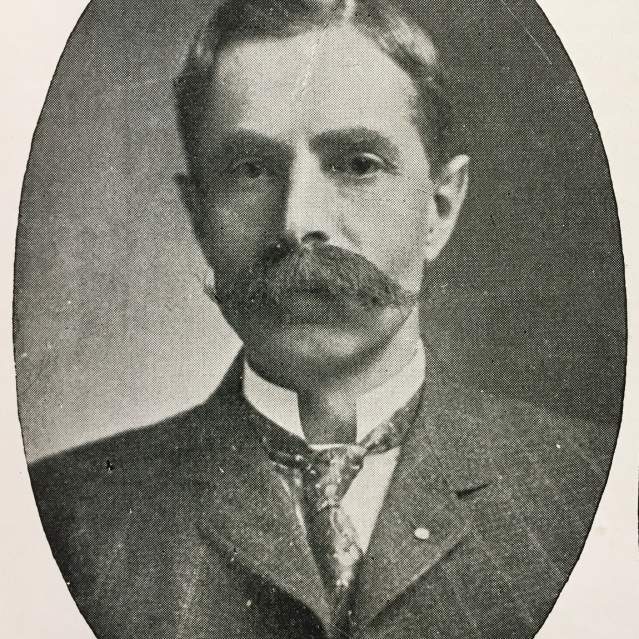
William James Savage, inventor of industrial machinery. (University of Tennessee Libraries.)
Savage Garden in Fountain City. (Knoxville History Project.)
Author
Jack Neely
Jack is the Executive Director of the Knoxville History Project, an educational nonprofit whose mission is to research and promote the history of Knoxville. He is a journalist who has been writing about his hometown’s character and heritage for many years. He has written several books about Knoxville and its history, and they can be purchased in various places throughout the city including Union Avenue Books and the Visit Knoxville Gift Shop.