It’s been 10 years since a vigorous group of young craftspeople and entrepreneurs—“makers”—began to style Knoxville “The Maker City,” about the same time that Etsy, the online marketplace, confirmed that claim as a national designation. And it’s true there’s a lot of making going on here lately—bread, posters, beer, caps, pies, iron sculpture, drinking glasses, hot sauce, pottery, quilts, jam, signs, handbags, etc.
The Maker City collective is celebrating its Maker City Summit in late January. Does “making” make Knoxville different? It would take a major study to determine what city’s on top in terms of making useful objects. But Knoxville definitely has a making past.
Knoxville may seem a college town in 2025, and the University of Tennessee is the biggest single thing going on here today. But it wasn’t always that way. In the early 20th century, UT’s student body, staff and faculty combined made up less than two percent of the city’s population, and smaller than some factories. Most of the rest of the city was involved, in one way or another, with making things. All sorts of things. Knoxville may not have as many big factories as it once did, but you don’t have to go far to see evidence of that era.
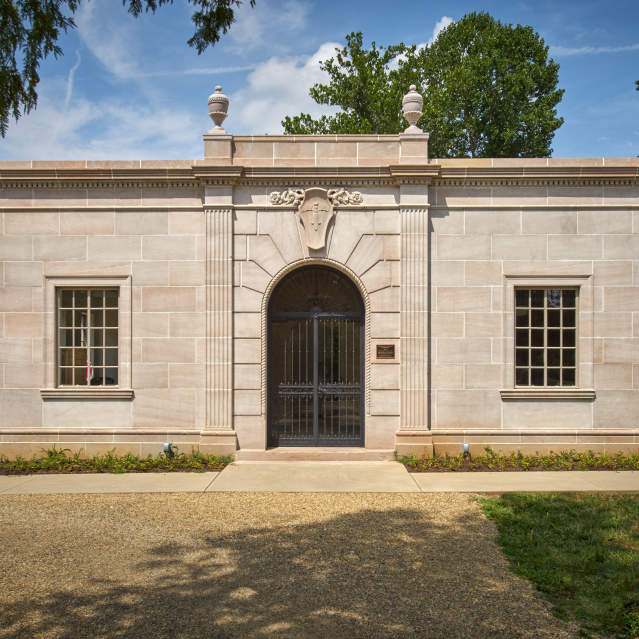
The old phrase Marble City, for example, has captured the imaginations of young people and made a resurgence. The Marble City Market is an upscale and culturally diverse food court on Depot Street. Marble City Opera is an independent and innovative performing-arts company that puts on operatic performances, sometimes in surprising places. Marble Alley is a modern residential development on State Street. Those are all 21st-century attractions. But the phrase Marble City goes back to the booming industrial era just after the Civil War, because Knoxville was one of the nation’s busiest suppliers of architectural marble for some of the great new buildings of the nation’s showplace cities, especially Washington and New York. Several old quarries still exist in the region, none of them more picturesque than Ijams Nature Center, a rare outdoor landmark that include several former quarries from different eras: one is now a deep recreational lake; another, the oldest, an unusual forested canyon; another that looks like the ruin of an Aztec temple. The extraordinarily unusual Candoro building off Maryville Pike was built a century ago to be an Italianate showplace for the many varieties of Tennessee marble. Around town are a variety of buildings that prove the diverse uses of this unusual limestone, from the stone Ramsey House, built in 1797 and believed to be the first structure ever built of Tennessee marble; to the old Custom House building downtown (now the History Center), built in 1874 as first large commercial use of the stone; to the old Post Office on Main Street, built in 1932 and a favorite landmark among students of architectural history.
Even though cotton never grew well in East Tennessee, beginning in the 1880s the city developed a dozen or more textile mills, some of them milling wool but most of them cotton. They employed thousands, but were all different companies, some of them competing with each other. They had different specialties: Brookside Mills, built on the northwest side of downtown in 1885, made complex fabrics like velvet and corduroy, while Standard Knitting Mill on the east side of downtown specialized in hosiery and undergarments. Several others were hosiery mills, and by the early 20th century, Knoxville was sometimes touted as “the Underwear Capital of the World.” Later, Knoxville hosted the largest Levi’s factory in America. Only a few of the old factories are still standing. Part of the Standard complex, vacant for some years and currently the subject of proposals for mixed-use residential reuse, is visible from Caswell Park. The Cherokee Mills building on Sutherland Avenue, fully renovated and used by several interests including UT, is a handsome old building. Brookside Mills was torn down decades ago, but its old factory-town urban center has revived in surprising ways as Happy Holler, the ca. 1900 nickname for this cluster of old buildings on North Central, a commercial district enjoyed by the people who worked at Brookside.
People who visited downtown in the late 20th century may remember, and miss, the fact that most of the northern part of downtown smelled like roasting coffee beans; that’s in fact what they did at the old JFG factory on West Jackson Avenue. JFG moved to a modern factory on the west side of town about 20 years ago, and doesn’t smell like it once did, but the old JFG sign is still visible on top of one of its buildings, and part of an old coffee-bean chute still hovers over the Old City sidewalk.
One of Knoxville’s most famous products was once White Lily Flour. It was invented and manufactured in the old J. Allen Smith flour mill, built in 1885 on Central, near the Old City. For about 120 years, the flour was manufactured mainly here, attracting a national and even international market, reaching discriminating bakers as far away as Cuba. Smith’s creation is still valued by bakery chefs nationwide, even specified in some recipes for biscuits and cakes. Bought by a corporation, White Lily moved its operations out of state about 20 years ago, but that original building is still standing, now a popular apartment building.
What do you do with flour? Well, you bake with it, and we’ve got lots of heritage in that department, as well, as is evident in the two remaining Kern’s Bakery buildings—Peter Kern’s original 1876 bakery and candy factory on Market Square—now the Oliver, the Oliver Royale, and Tupelo Honey—and its 20th century successor, the 1931 Kern’s building on Chapman Highway, a factory converted into a diverse food hall, an emporium of edible delights and fun. German refugee immigrant Peter Kern died back in 1907, but today many talented Knoxville entrepreneurs honor his heritage as a baker with modern businesses, like Magpie’s and Wild Love Bakehouse—both on North Central, which has more than a century’s history as a home for local bakeries.
One thing interesting to first-time visitors from certain other parts of the country is how many brick buildings there are. Knoxville made brick buildings in part because Knoxville made brick. Throughout the city’s history, there were several brickyards, some of them run by a generation of post-Civil War entrepreneurs, like the formerly enslaved Grundy Crump, who produced hundreds of thousands of good bricks for a growing city; the old mental hospital building at Lakeshore Park, once part of a much-larger complex, is believed to have been built with Crump’s bricks. Knoxville’s largest and most famous brick factory was probably the Scott Brickyard, which thrived on the west side of town, and supplied bricks for a national market, helping build large buildings as far away as the Midwest. There’s no trace of the old factory, which moved away before 1970, but there’s a plaque in the small shopping and restaurant area now called Homberg Place was once known as “Brickyard,” because it was a community of Black people who worked daily making bricks. An old A.M.E. Zion church still thrives on Homberg Drive, a rare remnant of that community.
Speaking of Homberg, it’s named for another industry. The Bowman Hat Co., originally located downtown in the building now known as Jackson Ateliers, moved out west to Bearden in the 1930s. One of their men’s felt hats popular in the 1930s and ‘40s was known as the Homberg (sometimes spelled Homburg). That’s how that nook got its name.
Knoxville also made fireplace mantels—a century ago, the C.B. Atkin Co. had an international trade and claimed to be the world’s biggest manufacturer of wooden mantels.
Knoxville’s beer-brewing history, which lasted from roughly the end of the Civil War to statewide prohibition in 1909, makes an interesting industry, run almost entirely by German (and a few Irish) immigrants. (Our paperback history, Knoxville Beer, tells the story.)
Knoxville has made all sorts of things over the years: buckets, buttons, saddles, kegs, chairs, candy, bricks, window sashes, coffins, socks, machinery, railroad spikes, theater curtains, railroad cars, and for a brief moment even automobiles; in the early 1920s, the Drake Motor Co. of South Knoxville made cars and trucks, if not successfully enough to become a household name. More successful manufacturing came in the form of another kind of vehicle, the boat. Although the nearest sea is hundreds of miles away, Sea Ray’s line of pleasure boats have been manufactured in the Knoxville area for decades.
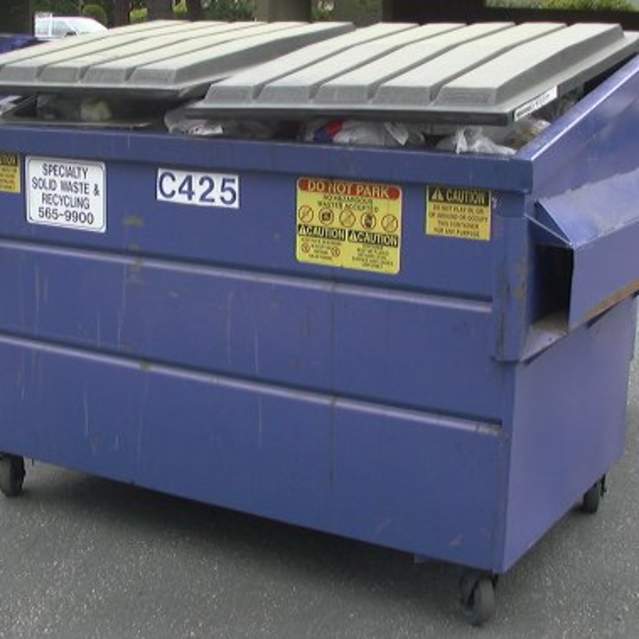
But perhaps Knoxville’s most famous creation was one today known throughout the world. Invented by equipment tycoon George Dempster, and introduced in downtown Knoxville in late 1937, the Dempster Dumpster became the answer to problems across the globe, and almost immediately introduced a new word to the English dictionary—though as a proper noun, as a trademark, it’s supposed to be capitalized, it now appears most often with a small d, as if it’s just a word that’s always been there.
Of course, we have had artists, too, from architectural sculptor Albert Milani, an Italian immigrant who moved here in 1912 to work with Tennessee marble, to Julie Warren Conn, known for her very modernist large works of stone, as well as noted glass sculptor Richard Jolley. Patricia Nash is known far and wide for her high-fashion handbags. Several painters of the past, from soft impressionist Catherine Wiley to bold abstract impressionist Beauford Delaney, who’s better known today than he was in his 20th-century lifetime, as well as many contemporary painters who make a living with their art on canvas.
All that sewing, painting, chiseling, brewing, fabricating has been going on for a long time. The only thing modern about that is the new trend to call them all “makers” and to hail them as a whole class of professionals any city would be proud of.
Jack is the Executive Director of the Knoxville History Project, an educational nonprofit whose mission is to research and promote the history of Knoxville. He is a journalist who has been writing about his hometown’s character and heritage for many years. He has written several books about Knoxville and its history, and they can be purchased in various places throughout the city including Union Avenue Books and the Visit Knoxville Gift Shop.